How to make membership matter when no one has to join
For almost every association and professional body, membership is a choice. No law requires it, no employer mandates it, and every renewal is a small decision a member makes about whether the value still outweighs the fee. That choice is easy to forget when you are deep in the work of running the organization, but it sits underneath everything: recruitment, retention, engagement, and the long-term health of the community you serve.
Some organizations feel that pressure more acutely than others. The Institute of Translation and Interpreting works in a profession with no statutory regulation in the UK and no protected title. Anyone can call themselves a translator or an interpreter, with no qualification and no oversight. As ITI’s chief executive, Sara Robertson, describes it, it is “the wild west out there.” There is nothing to compel a professional to join ITI, and nothing to stop a client from hiring someone who never has. That is the sharpest possible version of a question every membership organization faces: when you cannot make people join, how do you make membership mean something?
The answer is not a louder pitch about member benefits. It is building value that members can see, that the outside world can verify, and that members feel often enough to keep choosing it. Those three things – visible, provable, and felt – are a useful way to think about the whole proposition.
Make the value visible
A benefit that members cannot see does not influence their decision to join or renew. The work of membership has to surface somewhere a member encounters it, ideally somewhere that also does something for them commercially or professionally.
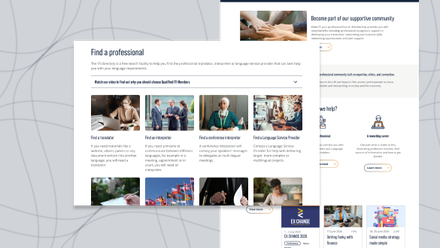
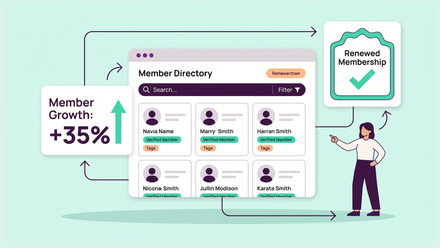
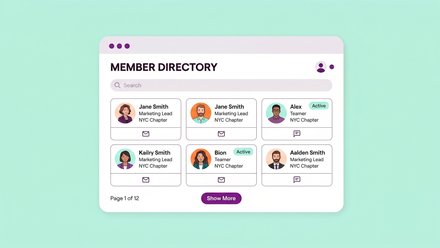
For ITI, that place is its public directory. Only members who pass ITI’s assessment and earn qualified status are listed, which makes the directory both a public marker of competence and a reason to invest in qualifying in the first place. It is well used, drawing more than 21,000 visits from over 5,000 active users in 2026 to date, who spend an average of close to three minutes weighing the results rather than bouncing away.
Visibility does not have to mean a directory. It can be the recognition of a credential, a member spotlight, a discussion forum where expertise is on display, or simply a platform members actually log into. The Institute of Internal Communication saw new member applications rise by 52% and website users climb by 83% after rebuilding around a platform that made the value of belonging visible and easy to act on. AMOSSHE, the student services body, reached 81% platform adoption, with almost half of its members actively collaborating in discussion groups. Adoption like that is not a vanity metric. It is evidence that members can see what they are paying for.
Make the value provable
Visibility raises a member’s profile. Proof is what lets the outside world trust it. In sectors where credentials carry weight, the ability to demonstrate that a member is genuinely qualified is often the single most valuable thing an association does.
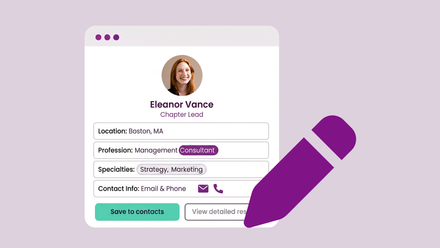
ITI offers a clear example. Many UK government bodies, courts, and agencies ask for certified translations, and they want assurance that the person behind the work is a real professional. ITI provides that through Member Check, a simple public lookup that lets anyone type in a name, with no login required, and confirm whether that person is a qualified member. It runs to hundreds of checks a month, for documents like marriage certificates, divorce papers, and qualifications headed to court. In a profession with no regulator, ITI has effectively built the trust layer the law does not provide, and membership is the thing that grants access to it.
The same principle drives value in credentialing-heavy sectors elsewhere. The American Association of Professional Landmen rebuilt its certification program on a single platform, consolidating six separate systems and saving more than $200,000 a year in the process, while making its credentials far easier to manage and prove. When a credential is easy to verify, it is worth more, and so is the membership that confers it.
Make the value felt
Visibility and proof bring members in. What keeps them is whether they feel the value often enough to renew without thinking hard about it. That feeling comes from engagement, development, and the sense that the organization is genuinely working on their behalf.
Professional development is one of the most reliable ways to create that feeling, because it gives members something concrete and personal. ITI encourages members to log continuing professional development against an annual plan, and has gamified it with badges and milestones that make progress visible and motivating.
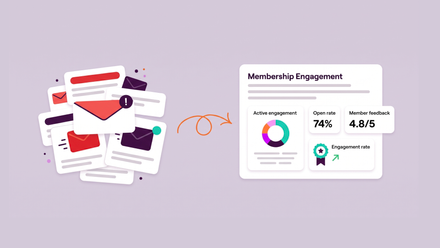
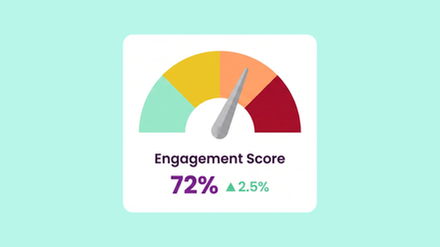
Engagement also shows up plainly in retention data. The Federation of European Self-Storage Associations lifted retention from 85% to 94% and saw half its members renew two months early after moving to a platform that let it personalize communications and reduce friction. The National Association of Campus Activities transformed its member communications, with email click-to-open rates rising from 5% to between 25% and 30%, and recorded 3,500 first-time logins as members engaged with a platform that finally felt built for them. None of those numbers come from a harder sales pitch. They come from members feeling, repeatedly, that membership was doing something for them.
Why the platform matters
Making value visible, provable, and felt is a strategic choice, but it depends on practical infrastructure. You cannot surface a credential without somewhere to display it, you cannot let the public verify a member without a tool that does it, and you cannot personalize engagement at scale with spreadsheets and disconnected systems.
This is where an association management platform earns its place. ReadyMembership brings the directory, credential verification, professional development, events, and member communications into a single source of truth, so the value of membership is not scattered across tools that do not talk to each other. For ITI, a team of around seven people serving 2,600 members, the point is not a long list of features but having stable, flexible systems that do the essential jobs well and can be adjusted as needs change.
What matters to us is having relatively straightforward, stable systems that just do the job really well, with enough flex that we can fine-tune things as we go. In a sector with no regulation, the platform is a big part of how we help demonstrate our credibility and the professionalism of our members.
That is the quiet truth behind voluntary membership. You cannot make anyone join, and you cannot make anyone stay. What you can do is build an organization where the value is visible enough to attract people, solid enough to trust, and present enough in their working lives that renewing feels obvious. The platform is not the value itself, but it is what makes that value real and repeatable, every day and every renewal cycle.