Turn your member directory into a recruitment and retention engine
Most associations have a member directory, and most treat it as a utility: a searchable list of who belongs, kept reasonably up to date, linked somewhere in the footer. That is a missed opportunity. A directory that is designed well does far more than record membership. It becomes a reason to join, a reason to renew, and in the best cases a channel through which members win actual work. The difference between a directory that sits idle and one that drives growth comes down to how deliberately it is built and positioned.
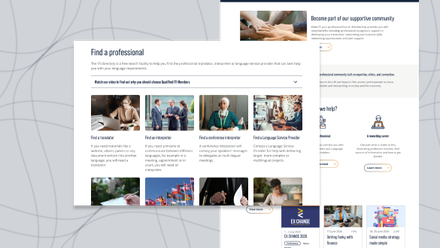
The principle is simplest to see in professions where members depend on being found. The Institute of Translation and Interpreting runs a public directory of translators and interpreters, and because the UK profession has no statutory regulation, that directory carries unusual weight. Only qualified members who have passed ITI's assessment are listed, which makes inclusion both a mark of competence and a tangible benefit of membership. Listing in the directory is the visible reward for qualifying, the public proof of professional standing that members cannot get any other way.
A directory is a reason to join and renew
When a directory listing represents real commercial value, it changes the membership conversation. A prospective member is not just buying access to resources, they are buying visibility to the people who hire. A renewing member is not just paying a fee, they are keeping a listing that brings them work. That reframing is powerful, because it ties membership directly to the member's livelihood rather than to a vaguer sense of belonging.
The ITI directory drew more than 21,000 visits from over 5,000 active users in 2026 to date, and those visitors engage seriously, spending an average of close to three minutes considering the results. That level of engagement reflects a directory people are using in earnest, not one they are bouncing away from.
The same logic applies well beyond translation. Any association whose members offer services, consultants, contractors, practitioners, specialist suppliers, can turn a directory into a lead source that members would be reluctant to give up. When members can point to work or connections they gained through the directory, renewal stops being a question.
Design decides whether a directory gets used
A directory only delivers if people can find what they are looking for, and that depends on search built around how users actually think. The structure needs to reflect the real questions a client arrives with, which is why directories designed around specific search filters get used rather than abandoned.
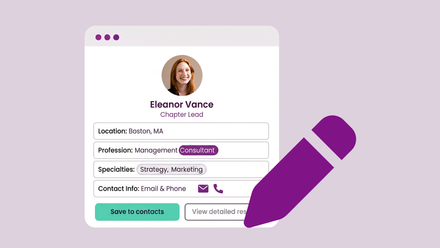
The other half of good design is giving members control of their own profiles and helping them use it. A directory is only as strong as the listings inside it, and that creates a familiar problem: some members build rich, compelling profiles while others leave them thin or empty, then wonder why no one contacts them. Regular guidance that nudges members toward profiles that actually win attention is what separates a directory people trust from one they ignore.
A directory feeds engagement and data
Beyond recruitment and retention, an active directory generates something most associations are short of: insight into what members and the public actually want. Usage patterns across the directory inform everything from member guidance to where the organization focuses its attention.
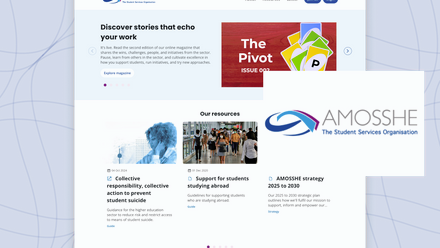
A directory also reinforces the wider value of belonging. AMOSSHE, the UK student services body, reached 81% platform adoption, with nearly half its members actively collaborating, after building an experience members wanted to log into. The Institute of Internal Communication saw website users rise by 83% and applications climb by 52% as its platform became somewhere members engaged rather than ignored. A directory is part of that picture: a reason to log in, keep a profile current, and stay connected to the organization between renewals.
Making it work in practice
A directory that recruits and retains members is not a separate product bolted onto your website. It works because it draws on the same membership data the association already maintains, so listings reflect current, verified status without manual duplication, and so the public sees the same record the association manages internally.
ReadyMembership builds the directory into the core platform, with customizable search, member-controlled profiles, and a single source of truth behind it, so the listing a member sees, the search a client runs, and the membership record the team manages are all the same data. For ITI, that means a directory that doubles as proof of qualification, a lead source for members, and a live read on what the market is looking for, all without a separate system to maintain.
The shift worth making is one of intent. A directory treated as a list will behave like a list. A directory treated as a member benefit, designed around how people search, populated with strong profiles, and tied to the value of belonging, becomes one of the most effective recruitment and retention tools an association has. The technology makes it possible, but the results come from deciding the directory is there to work for members, not just to record them.