Showing members what their membership is worth
Sooner or later, every member business asks the same question at renewal: what did we actually get for our money? For a chamber, the honest answer is often "quite a lot". A business might have attended networking events, booked training, processed trade documents, responded to a policy consultation and read every newsletter. The difficulty is that this activity is spread across events, finance, email and trade systems, so neither the member nor the chamber has the full picture when the renewal decision is made.
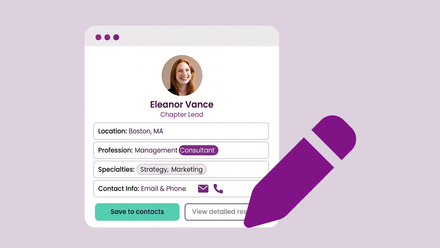
A member value statement solves that. It's a short summary, for an individual or for a whole member organisation, of what they've used and received over the membership year. Done well, it turns a vague sense of value into something concrete, and it gives your team a better starting point for the renewal conversation.
Why it matters most for quieter members
The members who most need a value statement are often the ones who've engaged least. These are the businesses that reach renewal, look back over the year and decide the membership hasn't been worth it, often without the chamber ever realising they were drifting.
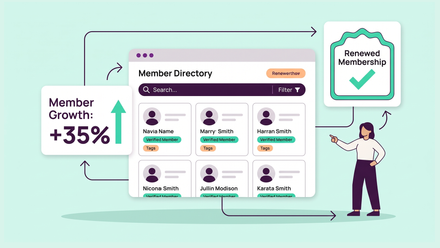
Staffordshire Chambers of Commerce found that once it could see engagement across around 20 behaviours, only about 10% of members were at real risk, not the half it had assumed. Its team now contacts those members two to three months before renewal. A value statement is a natural thing to bring to that call.
What to include in a member value statement
The most useful statements combine what the member organisation has done with what membership has made available to it. For a chamber, that might cover:
- Membership grade, how long they've been a member, and how many of their staff are registered contacts
- Events and training booked and attended, across all their contacts
- Trade documents processed, room hire and other services used
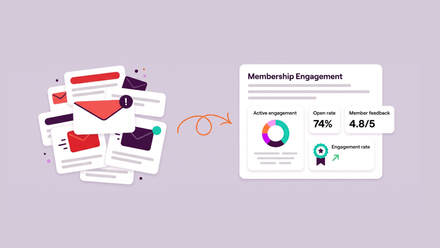
- Engagement with communications, such as emails opened, portal logins and forms submitted
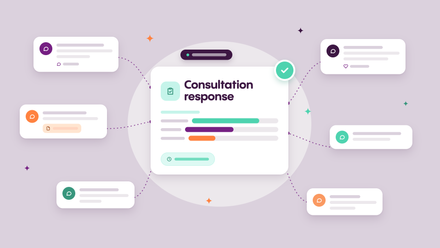
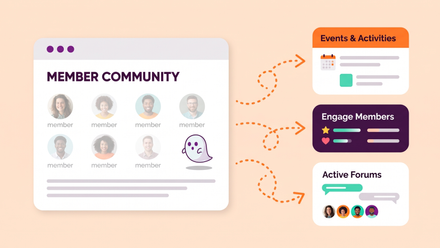
- Community group activity and responses to policy consultations
- Member benefits and partner offers they're entitled to
Rolling individual activity up to organisation level matters for chambers, because the person signing off the renewal is rarely the person who attended the events.
Framing it for light users
A common mistake is to send a statement that mostly shows what a member hasn't done. Speaking at the Future-ready chambers webinar in October 2026, Pixl8's Luke Holderness explained how to turn that around:
Sometimes when you run an engagement report, it highlights what they haven't done. If they've been really heavy on events, we can show all the different types of events they've been to. But if they haven't, we can flip that around and show the number and breadth of events that ran in that subscription period. It's still a positive report: this is the opportunity you had.
Telling a quiet member that they could have met hundreds of local business leaders at dozens of events last year is more persuasive than an empty activity log, and it gives your team a reason to suggest specific events or services for the year ahead.
Producing them without a spreadsheet marathon
If your data lives in separate systems, a value statement means exporting and merging reports by hand, which makes it hard to do for more than a handful of members. When everything sits in one platform, the statement can be produced from live data. In ReadyMembership, staff can build it from reports and dashboards, or simply ask the built-in AI assistant for a membership benefit report on a named organisation. It returns their grade, tenure, contacts, subscriptions, email engagement, logins, form submissions and event bookings and attendance, and staff can ask follow-up questions from there. That makes it realistic to prepare one before any account call, not just once a year.
When to use them
The statement is most useful a couple of months before renewal, but it also works well as a mid-year check-in for large or strategic members, and as an annual summary email to every member. Because the statement draws on live data, it reflects what the member has actually done right up to the day it's sent, so it can be timed around your renewal cycle rather than your reporting calendar.
Where ReadyMembership fits
To see the AI assistant produce a report like this live, join Luke at our AI for chambers webinar on Wednesday, 18 November, or read how Staffordshire Chambers used engagement data to lift retention from 82% to 87%.