How to build a membership renewal email sequence that actually works
If your membership renewal emails start a month before expiry and sound more anxious with each reminder, you're not alone. That's how most renewal sequences are set up, and it's a big part of why so many of them underperform. By the time the first reminder arrives, most members have already decided whether membership is worth it. They've based that on everything that has (or hasn't) happened over the past year.
The good news is that renewal is the most predictable moment in the whole member relationship. You know exactly when each member is due, what they paid last year and whether they've been showing up. That gives you a lot to work with, as long as you plan the sequence around it.
Start the conversation before the renewal window opens
Every time a member opens one of your emails, books an event or logs in, they're quietly answering the question "am I getting value from this?" They answer it every time they don't, too. The renewal email rarely changes that answer. What it does is prompt them to act on it.
So the real work starts a few months earlier. A few touchpoints worth building into the lead-up:
- A mid-year check-in that points to the benefits they've used and one or two they haven't tried yet
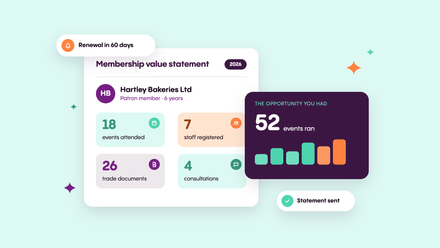
- A personalized summary of their year, such as events attended, resources downloaded and CE or CPD hours logged
- A benefit-focused message two or three months out that presents renewal as carrying on with something useful rather than an admin task
Engaged members will read these as a natural part of the relationship. For members who've gone quiet, they work as an early warning, while there's still time to reach out personally. Getting in early pays off. After FEDESSA, the European self-storage federation, started using member data to personalize its communications, half of its members began renewing two months before expiry, and retention rose from 85% to 94%.
What to put in your membership renewal emails
Once the renewal window opens, think of the sequence as three or four emails that each have a different job. That works better than sending the same reminder again and again with more urgency each time.
1. The first email: remind them what they get
This should be the warmest email in the sequence. You've got time, so it doesn't need to be urgent yet. Remind members what they've had from their membership and what's coming up that they'd miss. Make renewing as easy as possible, with one clear call to action and a link that goes straight to payment. If you can mention something specific, like their membership tier, their professional area or an event that's relevant to them, it will feel far more personal than a generic "your membership expires soon."
2. The practical reminder
Around two weeks before expiry, send a shorter, practical note: when the renewal is due, how to pay, and who to contact if anything has changed, such as a new employer now paying their dues.
3. The deadline email
In the last few days, it's fine to be clear about the deadline. Just keep the tone confident rather than pleading. An email that sounds desperate can leave members wondering whether the organization is as strong as they thought, which is the last thing you want at this point.
4. The win-back email
If someone lapses, contact them within a few days rather than a few weeks. In the first week, you're helping them pick up where they left off. Two months later, you're asking them to rejoin, which is a much bigger ask.
It's also worth giving first-year members their own version of the sequence. They haven't been through a full year with you yet, so they may not have seen everything their membership includes, and their renewal is when they decide whether you're part of their professional life. Starting a little earlier, pointing them to the benefits they haven't tried yet and inviting them to something specific before renewal is due can make that decision much easier.
Handling a fee increase
Years when your fees go up need more planning. The worst place to announce an increase is the renewal reminder itself, when members are already weighing up whether to renew. It lands as bad news attached to a request for money.
It's better to announce the increase separately, well before the renewal window, and explain clearly what's driving it. If your system supports it, give members the chance to renew early at the current rate. Members get a fair deal. In return, you get a smoother renewal curve, less pressure on the team in peak season and earlier visibility of income.
What automation can and can't do
Automating the sequence takes a lot of manual work off your team, especially with hundreds or thousands of members on overlapping renewal dates. It also means nobody slips through the cracks because someone was on vacation or a list didn't get updated.
It helps a lot when your renewal emails run from the same system that holds your membership data. The sequence can then respond to what's actually happening. It can stop as soon as someone pays, switch to the first-year version for new members, or mention the events a member has booked. RAPS, the Regulatory Affairs Professionals Society, now sets and changes its renewal email timing in-house instead of relying on a separate marketing system.
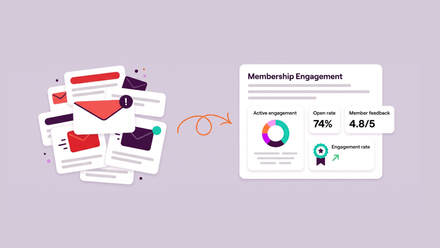
Even so, a sequence can only build on the relationship that comes before it. When NACA, the National Association for Campus Activities, moved its membership communications onto one platform, its email click-to-open rate went from 5% to between 25% and 30%. Renewals went from needing three staff to one. That came from cleaner data and better targeting across the whole year, not from a cleverer reminder email.
Where ReadyMembership fits
ReadyMembership runs renewals, payments and email marketing from the same member record, so your renewal sequences can start, stop and adapt based on what each member has actually done. Read how FEDESSA lifted retention to 94%, or see the email marketing features.