How chambers of commerce can turn export document customers into members
If your chamber issues certificates of origin and other export documents, some of the businesses that use that service most often have probably never joined. They come back every time they ship, they trust you with paperwork their business depends on, and many of them would be a natural fit for membership. Yet in most chambers, nobody on the membership team knows who they are. This post looks at why that happens, and how bringing trade documents into your CRM turns those customers into a steady source of new chamber of commerce membership.
Why your trade customers are invisible to the membership team
Trade documentation usually runs in its own system. Your international trade team knows exactly which businesses submit documents and how often, but that knowledge rarely reaches the people selling membership, and the CRM has no record of the relationship. A business that has submitted dozens of certificates this year can look, from the membership side, like a complete stranger.
That’s a missed opportunity, because these businesses have already done the hard part. They’ve found you, they rely on a service you provide, and they’ve seen your team at work. You don’t need to persuade them the chamber is useful; you need to show them what more they’d get by joining.
What changes when trade documents sit in your CRM
Chambers on ReadyMembership connect their trade documentation through an integration with the e-Cert platform. Every few minutes, document records are pulled into the platform and matched to the organisation and contact that submitted them, whether or not the business is a member. If a trade customer later joins, it keeps the same record, so its trade history comes with it.
At Sussex Chamber of Commerce, the first chamber to use the integration, it has also improved things for trade customers. Rather than a separate invoice for each document, they receive one monthly invoice and can log in to see a breakdown of every document processed that month.
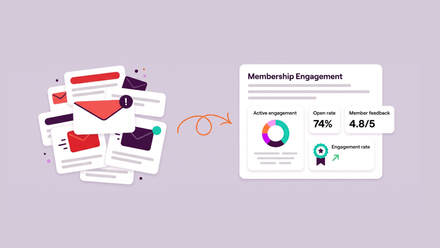
The bigger change is visibility. Once trade activity sits alongside membership data, you can see the whole relationship with a business, not just the part that involves a subscription. Staffordshire Chambers of Commerce scores around 20 member behaviours to understand engagement. Attending a networking event scores higher than logging in to the portal, and submitting an international trade document scores higher still. That wider view changed how the team judged who was engaged.
Before ReadyMembership, I could only measure engagement against three things: events, room hire, and training. Now I have between 15 and 20 indicators. That stopped me wrongly writing off members who were actually engaged. I just couldn’t see it before.
How to grow chamber of commerce membership from your trade customers
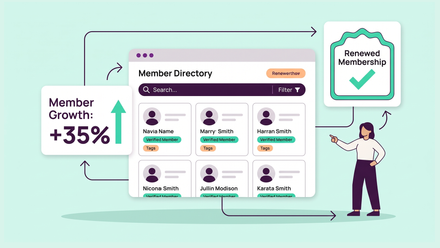
With trade customers in your CRM, you can treat them as a pipeline rather than a list of transactions. Here’s what that looks like in practice.
1. Start with your most frequent non-member customers
Sort non-members by how many documents they’ve submitted in the last year. The businesses at the top already use your chamber regularly. They’re the ones most likely to see the value of joining, so that’s where your team’s time will go furthest.
2. Give every opportunity an owner
Create a membership opportunity for each business you want to approach, with someone responsible for it and a date for first contact. Calls, emails and notes are then recorded in one place, so nothing is lost if a colleague is away. If you’re starting from a long list, the AI assistant in ReadyMembership can create the organisations, contacts and opportunities for you from a spreadsheet.
3. Send messages that reflect what they already use
A business shipping goods overseas cares about different things from one that mainly comes to networking events. Segment your trade customers (for example, businesses with no membership that have submitted a document in the last three months) and talk to them about the export support, events and policy work that membership includes. Corin Crane, Chief Executive of Coventry and Warwickshire Chamber Group, described the approach his chamber is aiming for:
We would much rather things are going out to 10 or 15 people that are really interested in a product rather than sending out 12,000 messages across the network.
4. Make the member saving obvious
Set member and non-member prices for each document type and let the platform apply the right one automatically. Show the member rate on your website too, so a regular trade customer can work out for themselves how much joining would save them.
Where to start
If your trade documents and membership data sit in separate systems, a useful first step is to compare the two. Take last year’s list of trade document customers and check how many of them were members. The businesses that weren’t, especially the ones that came back several times, are your first list of prospects. The size of that list also gives you a quick sense of how much of your membership pipeline is already walking through the door.
Where ReadyMembership fits
ReadyMembership brings your CRM, website, events, finance and e-Cert trade documents into one platform, with AI built in, so your membership team can see every business you work with, member or not. Read how Staffordshire Chambers of Commerce made international trade easier for its member businesses, see ReadyMembership’s integrations, or join Luke Holderness at our AI for chambers webinar on Wednesday, 18 November to see the tools in action.