How to stop your member community from becoming a ghost town
A quiet community tends to follow the same pattern. It launches with a round of introductions, a few threads started by staff get replies, and within six months the most recent post is weeks old. The usual response is more promotion: newsletter features, reminder emails, and staff posting to get conversations going. That can lift activity for a week or two, but the effect rarely lasts.
The cause is usually how the community is set up rather than how much it's promoted. Members arrive, find a general space with little that relates to their work, and don't come back. Four changes tend to make the biggest difference.
1. Put members into groups automatically
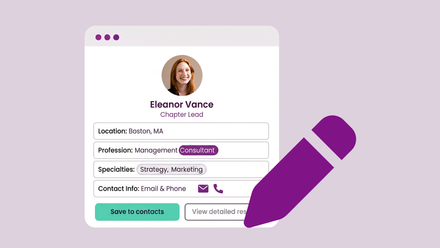
In most community tools, a member has to discover that a relevant group exists, decide it's worth joining, and then join it, and plenty of people drop out somewhere along the way. If the community is connected to your membership data, you can skip those steps by assigning members to groups based on what you already know about them, such as their specialty, region, career stage or membership grade. They arrive in groups full of people in similar roles, having conversations that relate to their work.
2. Seed every group before members arrive
A group with no history gives nobody a reason to post first. Before opening a group, add a few pinned resources, the next relevant events, and two or three discussion threads started by staff or volunteer champions. The group doesn't need to be busy, but new members should be able to see what it's for.
3. Give groups content that doesn't depend on members posting
Member discussion is the most valuable part of a community and also the least predictable. Groups that pull in relevant news, events and documents from across the association have something new in them every week, which gives members a reason to check back between conversations.
4. Keep group membership accurate
When members change role, move region or let their membership lapse, their groups should change with them. If someone has to update this by hand, it falls behind, and groups slowly fill with people who no longer belong there. Rules that update automatically from the member record keep each group relevant to the people in it.
What this looks like with a dispersed membership
Meat Business Women supports women working across the meat supply chain in the UK, Australia and New Zealand, so a shared online space is essential to how the network functions. Around 20% of its entire membership logs into the platform every month. Membership Marketing Manager Rebecca Fearon described the aim of the project as "creating an engaging space where women across the industry could share their knowledge, support each other, and feel part of something bigger."
Where ReadyMembership fits
ReadyMembership's communities and groups module is built into the membership platform, so you can define groups by any CRM field and they update as records change. Each group has its own discussions, documents, events and news feed. Read the Meat Business Women case study, or see the communities and groups features.