Why your certification program is harder to run than it needs to be
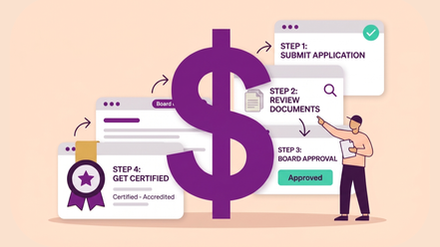
Most certification administrators I work with know exactly how their process is supposed to work. A candidate applies, their eligibility gets checked, sponsors submit attestations, a committee reviews the file, an exam gets scheduled, results come back, a credential gets awarded. The logic is clear. What is less clear is why so much of that sequence depends on a staff member manually connecting one stage to the next, and what happens to throughput and reliability when that person is unavailable, overloaded, or simply has too much else on.
When I talk to associations about their current certification setup, the question I find most useful is not “how does your process work?” but “how much of it actually runs itself?” In most cases, the honest answer is very little. Staff are the connective tissue holding the workflow together, not because the association has designed it that way, but because the technology they are using has left them no alternative.
The process you inherited versus the process you need
One of the most consistent patterns I see is associations arriving with a certification process that has been inherited rather than designed. It works, after a fashion, because dedicated staff have built workarounds around every gap in the system. But when you map it out step by step, you find layers of manual effort that exist not because they add value, but because nobody has ever had the opportunity to question them.
A good example is sponsor verification. Many certification programs require candidates to have their professional experience attested by sponsors, which is entirely reasonable. But the way that requirement is typically administered, sending forms by email, chasing responses manually, receiving PDFs that someone then has to download, check, and file, is a product of the available tools rather than a deliberate process choice. When the platform can generate and send sponsor forms automatically, track completion in real time, and route verified attestations directly into the application, the requirement does not change. The work required to fulfill it does.
Committee review is the same story. Giving a committee the information they need to make a decision is obviously a core part of any credentialing program. But requiring each committee member to download a PDF, open separate documents for each sponsor attestation, click through multiple screens to record a decision, and then wait while a staff member manually updates the candidate’s record elsewhere: that is not a process requirement, that is just what happens when the system was not built for this job.
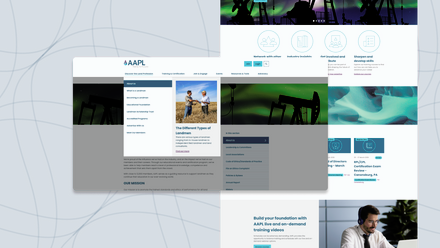
Before implementing ReadyMembership, the American Association of Professional Landmen (AAPL) was running its three-tier certification program (covering Registered Landman, Registered Professional Landman, and Certified Professional Landman designations) almost entirely through manual workflows like these. Checking that a single sponsor form was completed correctly required a certification administrator to navigate 10 steps, and that process had to be repeated separately for affidavits and transcripts. Committee members were opening multiple PDFs per applicant and clicking through six screens just to record a single approval or denial. The end-to-end review, approval and exam setup cycle was taking between four and six weeks.
“I can’t even tell you how much time it would take someone to go through that process,” says Andrea Spencer, AAPL’s Director of Communications. “A lot of people wouldn’t even go through it. It was just such a pain.”
Where the hidden time goes
The steps that consume the most time in a manual certification workflow are rarely the ones that feel significant. It is not the committee decision itself that takes hours. It is the preparation required before a committee member can make a decision, and the follow-up required after they do.
In practice this often looks like a certification administrator who spends a large portion of each review cycle compiling application files, chasing outstanding sponsor responses, formatting documents into a reviewable package, distributing that package to committee members, then collecting their decisions and translating them into system updates. None of that activity produces the credential. It is the overhead of a process that has not been automated.
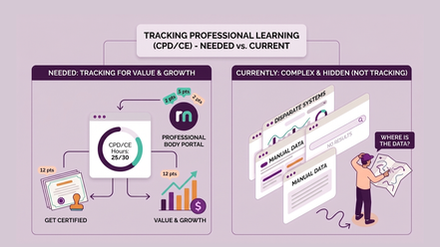
The same dynamic plays out at recertification. If the system cannot track CPD credits against certification requirements in real time, someone has to do that reconciliation manually at renewal time, and if lapse rules are not automated, staff tend to find out about a lapsed credential when a member contacts them rather than ahead of it. Reminders go out inconsistently because they depend on someone remembering to send them, and members let credentials lapse that they would have renewed with a well-timed prompt.
The cumulative effect is significant. Staff capacity that should be available for member-facing work, for following up with candidates, supporting first-timers through the application process, or developing the program itself, gets absorbed by administrative overhead instead.
Why simplifying the process matters as much as automating it
One thing that often surprises associations is that the path to a more efficient certification program does not always run through automation alone. Sometimes it runs through process redesign first.
When I work with associations on certification builds, one of the most useful conversations we have is about which steps in their existing process are genuinely necessary and which have never been questioned. What I often find is an approval stage that exists because a previous system could not run an automated check, so a human got inserted to do it instead, and nobody removed them when the technology moved on. Or a document that started being collected because someone requested it years ago, became part of the standard process, and is now gathered every cycle even though no one actually uses it in the review.
The instinct from most associations is to say: can you replicate our process in the new system? And I understand why: the process is known, it works well enough, and changing it feels like extra risk during an already complex project. But replicating a process that was designed around your old system’s limitations means you carry those limitations forward. The more valuable conversation is about what the process would look like if it were designed from scratch around what you actually need, and then building that instead.
What changes when you do this is not just the step count. Eligibility checks running automatically at the point of application mean candidates who do not yet qualify find out straight away rather than partway through a weeks-long process. Sponsor forms going out automatically with completion tracked in the system mean the committee only ever sees complete applications. Exam notifications going to all approved candidates in a single automated email mean nothing gets missed because someone forgot to action an individual record.
What the numbers look like when it works
After AAPL moved its certification program onto ReadyMembership, the step count for checking a sponsor form dropped from 10 to 3 or 4. The end-to-end review, approval and exam setup process fell from four to six weeks to two weeks or less. In the most recent comparable review cycle, all 43 applications assigned for review were completed and approved. In the equivalent period a year earlier, 18 had been assigned and 7 were not submitted or reviewed by the deadline.
The exam notification process, which previously required opening at least 10 separate windows per applicant to notify and record exam eligibility, now runs as a single weekly email sent to all approved candidates simultaneously. Grading and status updates are completed within the system.
The ease now with just checking a box on the verification versus what they had to do before, it’s literally game changing.
The credential itself has not changed. The professional standard it represents has not changed. What has changed is how much effort it takes for staff to administer it and for candidates to get through it.
The question to ask about your own program
If you are running a certification program today, a useful diagnostic is to map out how many manual interventions a single application requires between submission and credential issuance. Count the emails sent by hand, the documents downloaded and reuploaded, the system updates made by a staff member after a decision is recorded somewhere else. If the total is in double figures, you are almost certainly running on a process that was designed around your system’s limitations rather than around what your program actually needs.
The answer is not necessarily a new platform. But if your current system cannot automate sponsor verification, cannot route applications to committee members without staff handling the distribution, and cannot track CPD credits against certification requirements without manual reconciliation, then it is worth asking whether it is genuinely built for this work or whether your team has just become very good at compensating for it.
To see how ReadyMembership handles the full certification lifecycle, from configurable application workflows and automated sponsor management through to CPD tracking and digital credential issuance, explore the certification management features.