What your certification program could be doing for member loyalty
Managing a certification versus using one
When associations are asked what their certification program is for, the answers tend to be consistent. It generates revenue. It sets a professional standard. It gives members a designation they can use. All of that is true, and none of it is wrong. But what comes up much less often is what a well-run certification program can do beyond those things: give members a structured reason to keep engaging with the organization year after year, well beyond the point of initial application.
That is what the recertification cycle is, when it is treated that way. An association with credentialed members has members who need to renew, log CPD, demonstrate continued professional development, and stay connected to the profession. That structure is built into the program already. The question is whether the organization is set up to use it, or whether the administration of running the program is consuming the capacity that would otherwise go into that.
The version of certification management that appears most often is essentially transactional. A candidate applies, the application gets processed, a credential is issued, and the association moves on. The credential sits on the member’s record. When recertification comes around, a reminder goes out, the member either renews or doesn’t, and the cycle starts again.
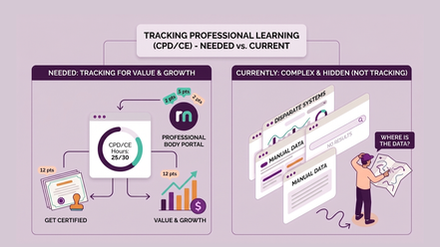
That is not a bad outcome. But it is often the ceiling rather than the floor, and it is the ceiling because the system the organization is on does not connect certification to anything else. The certification module does not talk to the membership record, the CPD tracker, or the events platform. So the data that would make the program feel proactive and personalized simply is not visible in one place, and anything more than a basic renewal reminder requires someone to pull it together manually.
What it looks like when that connection exists is quite different. The credential is not just a record: it is tied to what the member can access on the website, what content gets surfaced to them, what events are relevant at their grade level, how far they are through their CPD requirements ahead of the next renewal. The member is at a specific point in their professional career and the organization has the data to act on that, rather than treating every credentialed member the same way at renewal time.
What the recertification moment is actually worth
The recertification cycle tends to be treated as an admin task, and understandably so, because there is a lot of admin involved. A reminder goes out, the member clicks through, pays, and the credential is renewed. From an operational standpoint, that works. But from a retention standpoint, it is a missed opportunity, because the system knows things about that member that could make that interaction much more useful.
It knows how long they have held their credential. It knows what CPD they have logged and whether they are on track. It knows if they are at a grade where progression to the next level is possible. If that data is connected, the recertification touchpoint can be the start of a conversation about where the member is in their career and what the organization can offer them next, not just a prompt to pay a renewal fee.
In practice, this looks like different communications going to different members based on where they actually are, rather than everyone getting the same reminder on the same schedule. A member who is on track with their CPD gets a straightforward path to renewal. One who is behind gets a targeted message flagging the gap and suggesting specific events or courses that would count toward it. One who is eligible to progress gets that conversation opened proactively. None of this requires someone to manually identify and segment those groups. It requires the certification record, the CPD log, the membership record, and the email platform to be working from the same data.
The value statement question
One of the most useful early conversations in a certification build is about what the credential actually does for the end user. Not what it is on paper, but what it really means for someone who holds it. Does it give them access to content or community they couldn’t reach otherwise? Does it signal something to employers or clients about the standard they work to? Does it connect them to learning that keeps their skills current and their career moving?
Associations with a clear answer to that question are in a much better position to use the program for retention, because they know what the credential is worth to the member and they can make sure that value is visible throughout the journey, not just at the point of application.
When it is working well, the credential value is reinforced at every stage. A member who earns a designation gets immediate access to whatever comes with it (content, directories, benefits, community) without waiting for a staff member to manually update their record. As they move toward recertification, the communications they receive reflect what they have achieved and what they stand to gain from renewing, not just that a deadline is approaching. When they log CPD activity that counts toward their next cycle, they can see their progress update in their own dashboard. That ongoing visibility is what makes the credential feel like an active part of the member’s professional life rather than something they did once and filed away.
Where this plays out in practice
Associations that have moved to a more integrated, proactive approach to certification tend to see the retention benefit extend beyond credentialing. FEDESSA, the Federation of European Self Storage Associations, is a useful illustration of what happens more broadly when an association shifts from reactive to proactive engagement. After implementing ReadyMembership and connecting member data to drive targeted, automated communications, retention rose from 85% to 94% and half of all members were renewing two months before their renewal date. That was not one change: it was the cumulative effect of an organization that could see what members needed at each stage and act on it before they started to disengage.
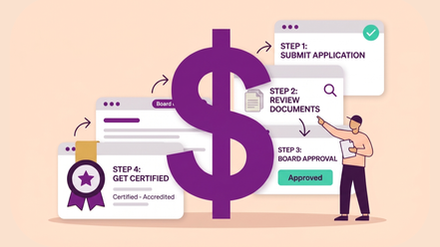
In certification specifically, AAPL (the American Association of Professional Landmen) shows what changes when the program is connected rather than siloed. Once the certification record was integrated with membership status, CPD activity, and exam scheduling in ReadyMembership, the team could see the full picture of where each candidate was and act on it. The processing overhead dropped significantly, with the review cycle going from up to six weeks to two weeks or less, and that freed up capacity for the member-facing work that actually builds the relationship.
The practical question to ask
The most common obstacle to using certification as a retention tool is not strategic. Associations generally understand the value. It is a data question. The information needed to do this well usually exists somewhere; it is just not connected in a way that makes it actionable.
The thing worth asking is whether your certification record, your membership record, your CPD tracker, and your communications platform are all working from the same data, or whether someone has to manually bridge the gaps between them. If the answer is the latter, the program is almost certainly being administered more thoroughly than it is being used. That is fixable, and the return on fixing it tends to be significant: not just in certification renewal rates, but in the broader sense that members feel the organization is paying attention to where they are in their career, not just waiting for the next renewal to come around.
To see how ReadyMembership connects certification management with membership data, CPD tracking, and automated engagement, explore the certification management features.