What associations get wrong about the candidate experience
Why the candidate experience is the design question, not just the operational one
Something I come back to regularly when working on certification builds is who, exactly, is going through the process. A candidate applying for a professional credential is not a passive member. They have decided they want to invest in their career, meet a defined professional standard, and align themselves more closely with the organization and the profession it represents. That is a high level of intent. The experience they have from the moment they decide to apply shapes how they feel about the organization for a long time afterwards.
That is what makes the candidate experience worth taking seriously as a design question, not just an operational one. When it goes well, it reinforces the value of the credential and the association behind it. When it goes badly, it does the opposite: the frustration tends to be disproportionate to the actual friction involved, because the candidate came in with high expectations and the process let them down.
What a poor candidate experience actually looks like
The most common version of a poor candidate experience is not an obviously broken process. It is a process that works, but only just, and only because the candidate is determined enough to push through it.
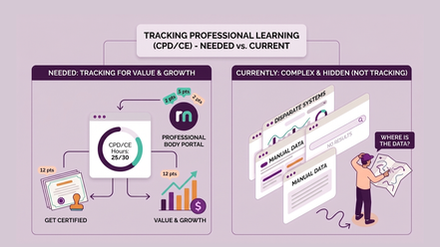
What I typically see is an application that starts online but quickly moves off-platform. The candidate fills in a form, and then receives an email with PDF attachments (affidavit forms, sponsor templates, instructions) that they need to download, complete, and return by email. They do not know where in the process their application sits after that. If a sponsor is slow to respond, they find out because the weeks are passing, not because the system has flagged it. If they are missing something, they find out when a staff member emails them, rather than at the point they tried to submit. And if they want to know their status at any point, they have to contact the office and wait for someone to look it up.
None of that is catastrophic. But it is friction at every stage of what should be a straightforward journey, and it accumulates. Andrea Spencer at AAPL described her organization's previous process in terms that will resonate with anyone who has managed a manual certification program:
"I can't even tell you how much time it would take someone to go through that process. A lot of people wouldn't even bother. It was just such a pain."
The fact that candidates do not always complain loudly about a poor experience is not a signal that the experience is fine. What often happens is quieter: the application rate is lower than it should be, completion rates drop off at specific stages, and candidates who do make it through are slightly less enthusiastic about the organization than they were when they started. Those effects are real, they are just hard to attribute.
Where the experience tends to break down
When I map out the candidate journey on certification builds, the points where experience most commonly breaks down cluster around three areas.
The first is eligibility. Many candidates do not fully understand what they need in order to apply, and that is not always their fault. Eligibility criteria are often documented somewhere, but not in a way that connects to the candidate's own record. They cannot see their CPD total against the requirement. They cannot easily check whether their membership grade qualifies them. They have to read a policy document and self-assess, and then potentially find out midway through the application that they are not eligible after all. An online application that checks eligibility automatically, against the actual data in the system, and tells the candidate upfront what they are and are not ready for, removes that entirely.
The second is visibility. Candidates who have submitted an application and are waiting on committee review or sponsor responses have no reliable way of knowing where things stand unless they ask. That creates a particular kind of low-level anxiety: they have done what they were asked to do, they are invested in the outcome, and they have no window into the process. Automated status updates and a candidate-facing dashboard showing where the application is at each stage address this without requiring any manual effort from the team.
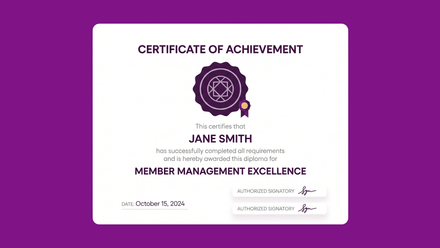
The third is the post-credential experience. This is the one that gets overlooked most often. The moment a candidate is awarded their credential should feel significant; it is, for them, a professional milestone. If the practical experience of that moment is that they receive an email telling them the decision, and then have to wait while someone manually updates their access and sends through their certificate, it deflates what should be a high point. When the system can issue the certificate automatically, update the member's benefits and content access in real time, and generate a digital badge they can share immediately, the experience matches the moment.
The customization trap
One of the things I find when working with associations on certification builds is the risk of designing the candidate experience around what the system can do rather than what the candidate needs, and then building increasingly complex workarounds to cover the gap. What I see in those situations is a process that technically works but is fragile, difficult to maintain, and often confusing for the candidate because the logic behind it has become invisible.
The cleaner approach, and the one that tends to produce the best candidate experience, is to start from what a good journey looks like for the person going through it and work backwards from there. What does the candidate need to know before they apply? What should they be able to see during the process? What should happen automatically when each stage completes? When those questions drive the design rather than the limitations of the current system, the result is usually simpler and more coherent, both for the candidate and for the team managing it.
What changes when the experience works well
When the candidate experience is designed with that kind of intentionality, the change in response is noticeable. Candidates who can check their own eligibility before they start, track their application status without contacting the office, and receive their credential with immediate access to everything that comes with it, tend to arrive at that credential with a stronger sense of connection to the organization than those who have battled through a paper-heavy, opaque process to get there.
That matters beyond the moment of certification. A member who has had a good credentialing experience is more likely to re-engage at recertification, more likely to recommend the credential to peers, and more likely to feel that the organization is genuinely invested in their professional development rather than just administering a program. The candidate experience is where that impression is formed, and it stays.
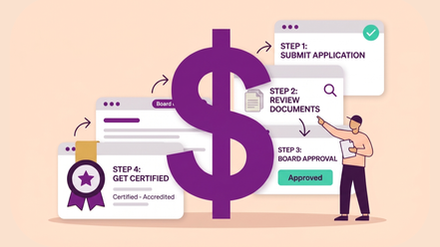
After AAPL moved to ReadyMembership, the difference in the certification experience for both candidates and staff was immediate. The step count for processing a single application dropped from 10 to 3 or 4. Committee review moved from a multi-PDF, multi-screen process to automated notifications with direct review links. Since launch, 10 members have completed the full certification journey (applying, testing, and becoming certified) in a period when, under the previous process, most candidates would still have been waiting for committee review to complete.
"The ease now with just checking a box on the verification versus what they had to do before," says Andrea Spencer. "It's literally game changing."
That shift is not just operational. It is a change in what the certification process communicates to the candidate about how the organization values their time.