Why association event platforms fail the organisations that need them most
Most associations don't run one event a year. They run dozens. Webinars, seminars, regional meetings, awards programs, annual conferences, workshops, forums — the event calendar is often the most visible expression of what membership actually delivers. And yet the technology associations use to manage all of this is frequently the weakest link in the entire operation.
The problem isn't usually that associations haven't tried to fix it. It's that they've fixed the wrong part of it.
The event platform trap
The standard approach to association event management has been to buy a specialist event tool and bolt it onto whatever else the organization runs. A ticketing platform here, a webinar tool there, a feedback survey platform somewhere else. Each one works tolerably well in isolation. None of them works well together.
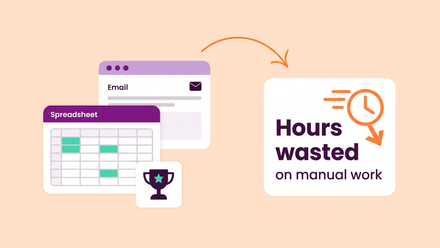
The consequences are predictable. Staff spend time manually exporting data from one system to import into another. Communications to delegates are generic because the event platform has no visibility of membership data. Post-event follow-up is delayed because attendance records have to be reconciled by hand. And when a delegate books onto a complex, multi-session event, they receive the same registration confirmation as everyone else — regardless of who they are, what they've booked, or what they need to know.
This is the event platform trap: solving the visible problem (getting people registered and into a room) while leaving the deeper problem untouched (giving those people an experience that reflects why they're there).
What association events actually require
There's a useful distinction between events that require capacity management and events that require member experience management. A commercial ticketing platform is designed for the former. A membership event platform needs to do both.
Consider what a well-run association conference actually involves. Before the event, the organization needs to reach the right people with the right message — which means knowing not just who is on the list, but who among them is a CEO vs. a head of events, which organization type they represent, whether they've attended before, and what sessions would be most relevant to them. That information only exists if the event platform can read membership data. Without that integration, every communication defaults to the lowest common denominator.
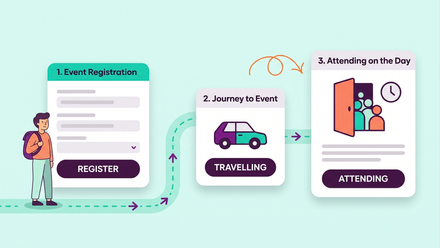
During the registration journey, different delegate types need different information and different options. An exhibitor's registration path looks nothing like a speaker's, and neither looks like a delegate's. For large events with multiple session streams, attendees need to be able to indicate preferences, complete preparatory tasks, and have their progress tracked. The more complex the event, the more the system needs to guide them through it intelligently.
After the event, feedback collection, attendance data, and CPD records need to flow back into the membership system without manual intervention. None of this is exotic. It's what a properly integrated membership platform makes possible, and what a standalone event tool cannot.
Automation as a strategic asset
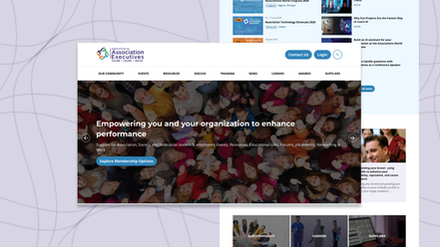
For associations running high-volume event programs — weekly webinars, monthly member meetings, regular online seminars — the economics of event management are fundamentally different from those of a single annual conference. The Association of Association Executives runs approximately 80 events a year, including around two online seminars every week for thirty weeks. A dedicated event coordinator to manage that volume would represent a significant budget commitment. With a platform that handles automated booking confirmations, pre-event reminder sequences, Zoom or Vimeo setup, attendance tracking, and post-event feedback collection, the same program can be managed by a single person whose focus is on content rather than logistics.
This isn't just an efficiency argument. It's an argument about what the organization can actually afford to offer its members. Many associations run substantial event programs free of charge or at heavily subsidized rates as part of the membership value proposition. That's only sustainable if the operational cost of delivering those events is kept low. Automation is what makes the math work.
Personalization at scale
The more sophisticated challenge for associations running large flagship events is personalization. Not personalization in the sense of mail-merge first names, but genuine content differentiation based on who the delegate is and what they're there to get out of it.
AAE's World Congress is a useful illustration of what this looks like in practice. Delegates come from trade associations, professional bodies, and federations. They range from CEOs to functional heads in events, membership, and marketing. They travel from across Europe and internationally. Sending them all the same promotional email recommending the same sessions is not just a missed opportunity — it actively undermines the proposition that the event is designed for them.
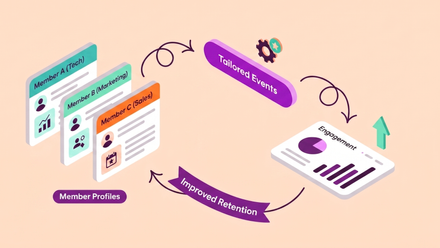
With ReadyMembership's rules engine, AAE assembles every outbound communication dynamically, drawing on organization type, role, and geography simultaneously. Recommended sessions change. Testimonials change (a CEO from a trade association sees a different endorsement than a head of events from a professional body). Example organizations already registered change. Even the offer section changes, targeting lapsed attendees and long-distance travelers with relevant incentives. By the time delegates have registered, they've already experienced a version of the event curated for them. The task management system continues that logic through to the event itself, walking each person through what they need to do next based on the sessions they've booked and the data the organization still needs from them.
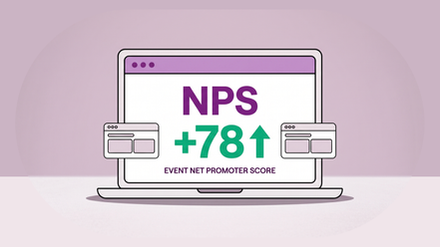
AAE's Net Promoter Score moved from 15 to 62 while using this approach. That trajectory reflects what happens when delegates feel that the event has been designed for people like them.
The integration question
It's worth being direct about why this kind of personalization requires a fully integrated platform rather than a best-of-breed stack. The rules engine that powers it needs to query membership data, event registration data, and behavioral data simultaneously, in real time, to construct the right communication for each individual. If those data sources sit in different systems, that query is either impossible or requires the kind of custom integration work that is expensive to build and fragile to maintain.
The same logic applies to everything else: automated reminders that reference specific missing tasks, session input forms that route automatically to the right leaders, attendance data that updates CPD records without manual intervention. Each of these requires the systems to talk to each other at the level of individual records, not batch exports.
This is the reason associations that have migrated from disconnected stacks to integrated platforms consistently report that the capability they value most wasn't one they anticipated when they were evaluating options. The specific features were on the list. The experience of having them all work together without friction was not something they could fully imagine in advance.
What to look for when evaluating event management in an AMS
For associations reviewing their technology and trying to assess event management capability honestly, a few questions tend to surface the real differences between platforms.
Can the platform assemble personalized event communications using membership data without custom integration? Does the booking journey adapt based on delegate type, membership level, or session selection? Can the platform manage task completion and send targeted reminders about specific outstanding items, rather than a generic "you haven't finished" prompt? Does attendance data feed automatically back into membership records? And critically: was the platform designed for associations running complex, multi-format event programs, or adapted from a tool that was designed for something else?
The last question matters because the architecture of a platform reflects its design intent. A system built around ticket sales will optimize for that. A system built for associations will reflect the operational reality that most association events are not simply transactions — they are member experiences, and the technology needs to support them as such.
ReadyMembership and association events
ReadyMembership was designed for associations from the ground up, which means its event management capability is built around the complexity that association event programs actually involve: multiple delegate groups and ticket types, a rules engine that draws on membership and organizational data, Zoom and virtual event integrations, automated pre- and post-event communications, forms-based session input, CPD tracking, and mobile app integration for large conferences.
For associations running high-volume seminar programs, that means the operational overhead of each event is minimal once the program is set up. For those managing flagship conferences, it means the delegate experience can be genuinely personalized at scale — not as a design goal, but as a practical output of the way the platform is built.
If your current event platform sits outside your membership system, or if delegate communications default to generic regardless of who the recipient is, those are the things worth interrogating when you next review your technology stack.