How to use personalization to improve your event NPS
What NPS is actually measuring at events
When the Association of Association Executives saw its World Congress Net Promoter Score rise from 15 to 62, the programming hadn’t changed in the ways you might expect. The same quality of speakers, the same calibre of sessions. What changed was how well each delegate felt the event had been designed for someone like them.
That distinction — between a good event and an event that feels tailored to you — is where most association NPS points are lost, and where the most straightforward improvements are available. The question usually isn’t whether your content is strong enough. It’s whether enough of the right people are experiencing it as relevant to them.
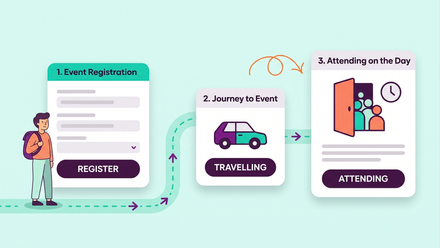
A Net Promoter Score asks one question: how likely are you to recommend this to a colleague? The answer reflects not just the content of the event but the entire experience: the process of finding out about it, registering, preparing, attending, and reflecting afterwards. A delegate who received a generic invitation, filled out a uniform registration form, attended sessions that were tangentially relevant to their role, and received a standard post-event email has had a fundamentally different experience from one who received a recommendation tailored to their function, was guided through a personalized booking journey, and left with a sense that the organization genuinely understands what they need.
Both delegates might score the content the same. But only one of them is likely to recommend the event with genuine enthusiasm.
Improving event NPS is not primarily a programming challenge. It is a data and personalization challenge, one that starts well before the event begins and continues well after it ends.
Before the event: the invitation as the first impression
The most direct lever most associations have on event NPS is the quality of their pre-event communications. A delegate who receives an invitation that speaks specifically to their role, their organization type, and their prior relationship with the event is already having a different experience from one who received the same email as everyone else on the list.
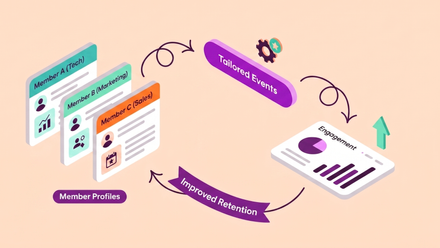
FEDESSA, the Federation of European Self-Storage Associations, built its personalization approach gradually over several years, using member data to segment communications based on interests, engagement levels, and seniority. The results were measurable: email click-through rates rose by 320%, retention improved from 85% to 94%, and event attendance grew by 29%. Former CEO Rennie Schafer’s view on what drove those numbers is instructive.
The 29% event attendance growth isn’t a separate story from the retention improvement. It’s part of the same one. Members who feel the organization understands them are more likely to attend. Members who attend well-matched events are more likely to renew.
For AAE’s World Congress, the pre-event personalization goes further still: recommended sessions assembled by role and organization type, testimonials matched to the delegate’s function, peer organizations surfaced as social proof, and targeted communications for lapsed attendees or those traveling from a distance. Every element of the invitation reflects a data query rather than a broadcast.
During registration: the questions you ask signal what you know
Registration is where most associations lose the personalization thread. After a carefully segmented invitation, delegates arrive at a uniform booking form that asks everyone the same questions in the same order. The implicit message is that the organization doesn’t yet distinguish between them, which is a jarring discontinuity from the personalized communication that got them there.
Purpose-built association event platforms allow the booking journey to adapt based on delegate type. An exhibitor’s registration path is different from a speaker’s; a first-time attendee needs different guidance from a returning delegate. The questions asked, the information provided, and the tasks flagged can all reflect what the platform knows about who is registering. That continuity, between the personalized invitation and the personalized registration experience, is part of what makes a delegate feel known rather than processed.
The gap between registration and the event itself
Most associations treat the period between registration confirmation and the event as a logistics window: send the reminder, include the venue details, confirm the schedule. The associations with the highest event NPS scores tend to treat it as a relationship window.
AAE uses ReadyMembership’s task management and forms system to gather delegate input in the weeks before the World Congress. Attendees booked into deep-dive sessions complete input forms specific to their session, which the session leader reviews to adapt the program before the event. Visual task displays show each delegate their progress (what’s complete, what’s overdue, what’s coming up) in a way that communicates complexity without creating anxiety. Targeted reminder emails reference specific outstanding items rather than sending a generic prompt.
The effect on session quality is direct. Speakers and session leaders arrive knowing who’s coming, having adapted their content accordingly. Delegates arrive having contributed to the program, which changes their relationship to it. None of this happens on the day. It happens in the weeks beforehand, through a series of data-driven interactions that the platform manages automatically.
After the event: closing the feedback loop
Post-event feedback is where most associations collect NPS data, but collecting it and acting on it are different things. The associations that improve their NPS year over year tend to be the ones that treat post-event data as an input to the next iteration rather than a report on the last one.
That requires the feedback to be specific enough to act on. A single NPS question and an open text field produces directional data. Feedback that is tied to which sessions a delegate attended, which tasks they completed, how they engaged with pre-event communications, and what their role and organization type are produces data you can use. When that data lives in the same platform as the member record, it enriches the profile that drives the personalization for the following year.
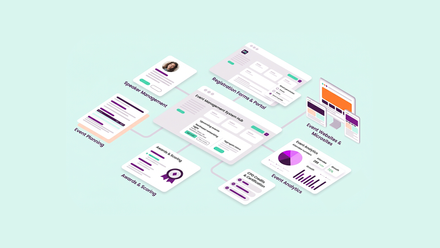
The practical path for most associations isn’t to attempt all of this simultaneously. FEDESSA’s approach, building the capability gradually and adding complexity as confidence grew, is a more realistic model. What matters is having the platform architecture in place to support that journey: a rules engine that can use member data to drive event personalization, event management that is integrated with the CRM rather than separate from it, and automated workflows that handle the communications sequence without manual effort for each individual send.
The NPS improvement that follows isn’t a mystery. It is the accumulated effect of delegates repeatedly experiencing events that feel designed for them rather than delivered to them.