What a ticketing platform can't do for your conference
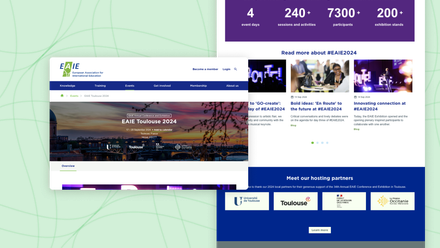
When the European Association for International Education moved to ReadyMembership, one of the things that made the decision straightforward was a basic operational reality. As Jackie van Doorn, their Project Manager, put it: “One of the driving forces behind our transition to ReadyMembership was our need for one unified platform that would be capable of managing membership, event registrations and more without the need for custom integrations.” EAIE was running one of Europe’s largest international education conferences (7,000+ delegates, 79 ticket types, 350 discount codes, attendees from 106 countries) on a patchwork of systems held together by custom code. When those integrations began to fail, the cost became impossible to ignore.
It’s a pattern that comes up repeatedly when associations reflect on why they changed platforms. The previous system worked, until the point at which the complexity of what they were actually trying to do exceeded what a bolt-together stack of tools could handle. And for most associations, that point arrives well before they expect it.
The gap between registration and event management
There’s a useful distinction to draw between a platform that manages ticket sales and a platform that manages association events. A ticketing tool is optimized for the former. It gets people through a booking flow, takes payment, and sends a confirmation. That’s a solved problem, and many tools solve it adequately.
What it doesn’t solve is everything that comes before, around, and after that transaction, which, for most association conferences, is where the real complexity lives.
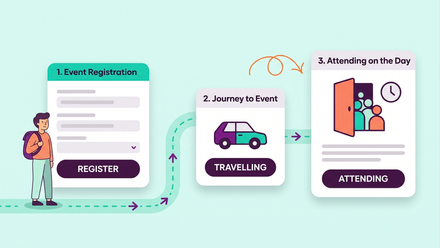
Consider what a conference actually involves for a membership organization. Before the event, you need to reach different delegates with different messages: a CEO from a trade association and a head of events from a professional body are attending for different reasons, and a generic promotional email treats them as equivalent when they aren’t. During registration, the questions you ask an exhibitor are different from those you ask a speaker, which are different again from those you ask a delegate booking into a deep-dive workshop. After registration, delegates need reminders, task completions, session inputs, and updates, none of which a ticketing platform has any visibility into, because it has no connection to your membership records.
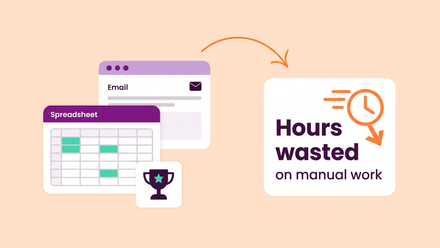
Megan Flower, Membership & Partnership Manager at Caravan Industry Victoria, described the situation her team faces before moving to ReadyMembership: “Managing our 30,000 to 40,000 attendee events requires military-like precision, but our events team currently operates on a separate platform from our main database.” The problem isn’t a lack of effort. It’s a structural one: when your event platform doesn’t share data with your membership system, the two are always out of step, and someone on your team is always filling the gap manually.
Why association conferences need purpose-built architecture
Damian Hutt, Executive Director of the Association of Association Executives, has been using ReadyMembership to run AAE’s events program (including the annual World Congress) for a number of years. His observation about the difference between purpose-built and adapted platforms is direct: “ReadyMembership hasn’t been devised out of a basic ticketing system. It was created for associations from the beginning for small and large complex conferences.” That distinction shows up in the architecture itself: ticket types, delegate groups, and the core roles of delegate, speaker, and exhibitor, all of the combinations that shape a delegate’s experience during booking and after it.
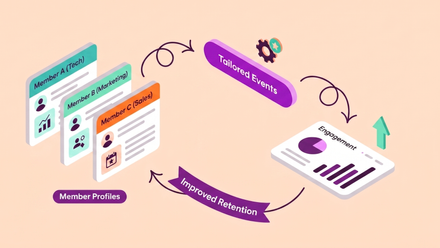
That architecture matters because it shapes what’s possible. A system built around ticket sales will model every attendee as a buyer. A system built for associations models them as members, speakers, exhibitors, or guests, each with different data requirements, different communication needs, and different journeys through the event. The difference isn’t cosmetic, it determines whether the platform can do the things association event teams actually need.
Those things include, at a minimum: personalizing the registration journey based on delegate type and membership status; managing tiered pricing that reflects member, non-member, and sponsor categories; handling multi-session selection and input; routing data from session bookings to session leaders; automating pre-event communications that reference specific tasks rather than sending generic reminders; and feeding attendance data back into membership records after the event without manual reconciliation.
None of these are unusual requirements. They’re what a reasonably complex association conference involves. But they all require the event platform and the membership system to be, at minimum, deeply integrated, and ideally, the same system.
What deep integration actually enables
EAIE’s experience at their 2024 Annual Conference in Toulouse illustrates the practical difference. With over 7,000 attendees, the team needed to manage complex VAT rules across multiple countries, control which tickets were visible to attendees based on their location, and integrate payment processing directly with their CRM so that transactions were reconciled automatically rather than manually. On their previous stack, payment processing integration with event registration created persistent reconciliation problems. On ReadyMembership, transactions were captured in the CRM and the payment platform simultaneously. Members gained self-service access to download their own invoices, receipts, and attendance certificates, a process that had previously required manual mail merges for over 6,000 people.
The EAIE’s work was recognized with an award for Best Digital Transformation at the International and European Association Success Awards. The judges noted it as “an incredibly complex undertaking that successfully integrated membership, VAT pricing, and event registration.”
For AHOU, the Association of Home Office Underwriters, the integration question centered on webinar delivery. Their previous platform had no integration with GoToWebinar, the tool their members expected and used. ReadyMembership built the integration they needed. As Rheanna Smith, Director of Operations, put it: “ReadyMembership said, yes, we can do it, and they did it.” That’s a different kind of flexibility from a ticketing tool that works the way it works and offers limited adaptability to how a specific membership program actually operates.
Questions worth asking when evaluating event management in an AMS
For associations currently reviewing their technology, a few questions tend to surface the real differences between platforms quickly.
Does the event platform share a database with your membership system, or does it integrate with it? Genuine sharing means a change in one is immediately visible in the other. Integration means a sync that can lag, fail, or require manual intervention. Does the booking journey adapt based on delegate type, membership grade, or session selection? Or does every registrant see the same form? Can the platform send targeted reminders about specific outstanding tasks, such as the session input form they haven’t completed or the dietary preference they haven’t submitted, rather than a generic ‘your registration is incomplete’ message? Does attendance data update membership records automatically after the event, or does that require an export and a manual process?
And perhaps most importantly: was the platform designed for associations running complex, multi-format event programs, or has it been adapted from something built for a different purpose?
That last question is harder to answer from a product page than from a conversation with an existing client. But it matters, because the architecture of a platform reflects its design intent. A system built for association complexity will handle it naturally. One adapted from simpler origins will always require workarounds at the edges, and at scale, those workarounds accumulate into the kind of operational drag that eventually prompts an RFP.
How ReadyMembership approaches association event management
ReadyMembership was built for associations from the start, which means its event management sits inside the same platform as membership records, communications, finance, and CRM, not alongside them. Delegate groups, ticket types, and role-based access are native to the architecture. The rules engine that drives personalization across the membership website and email system is the same one that controls what delegates see in their booking journey and after registration. Session management, abstract submissions, table planning, mobile app integration, and multi-currency pricing are all part of the same system.
For associations running high-volume programs, this means the operational overhead of each event is minimal once the program is established. For those managing flagship annual conferences, it means the complexity of what they’re actually trying to do, differentiated experiences for different delegate types, intelligent automation across the pre-event journey, clean data flowing back into membership records, is supported by the platform rather than worked around it.
If your current events platform sits outside your membership system, or if your team is regularly filling gaps manually between the two, that’s the thing worth examining when you next review your technology.