How event personalization drives member engagement and retention
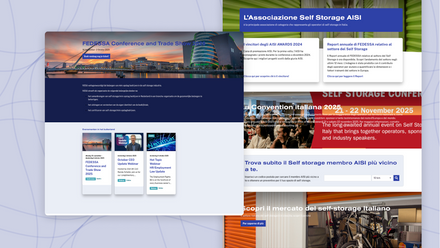
FEDESSA, the Federation of European Self-Storage Associations, didn’t set out to fix its retention problem by rethinking its events. It set out to use its member data better. But as its former CEO Rennie Schafer has observed, personalization turns out to touch everything: “Personalization touches every point, from member journeys, to retention to events. If you get it right, it gives you the ability to give members what they want, when they want it.” FEDESSA’s retention rose from 85% to 94% over the period it was doing this work. Event attendance grew by 29%. Email click-through rates increased by 320%.
Those numbers aren’t independent of each other. They’re describing the same underlying dynamic: when members receive communications that reflect what they actually care about, they engage more. When they engage more, they’re more likely to renew. Events are one of the most powerful levers in that cycle. What creates that leverage isn’t only what happens on the day itself; it’s how the organization communicates before, during, and after it.
Why generic event communications underperform
Most associations send the same event invitation to everyone on their list. It has the same subject line, the same program highlights, the same call to register. For members who happen to be the right audience for that event, it works tolerably well. For members whose role, interest area, or organization type means the event is only partially relevant to them, it lands as noise.
The consequence isn’t just a lower open rate on a single email. It’s a gradual erosion of the signal that the organization understands its members. Members who consistently receive communications that don’t reflect their interests learn to treat those communications as low-priority. Over time, they register for fewer events and engage less with the member portal, until renewal comes around and the relationship feels transactional rather than valuable.
Jemma Still, Executive Director of the Cancer Nurses Society of Australia, put the challenge directly when describing what her organization needed from a new platform: “We have a very broad membership base and we need to be able to segment it to ensure we are matching the specific needs of those members. We only want our members to receive communication that is relevant to them.” That isn’t simply a marketing preference; it’s a recognition that relevance is the foundation of engagement, and that engagement is what makes renewal feel worthwhile.
We only want our members to receive communication that is relevant to them.
What personalization at the event level actually looks like
Event personalization is often discussed in terms of email segmentation: sending different subject lines to different audience groups, or swapping out a testimonial block based on member type. That’s a starting point, but it understates what’s possible when event management and membership data sit in the same platform.
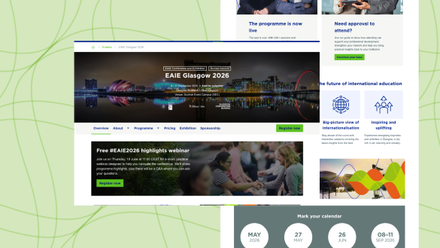
The Association of Association Executives runs its annual World Congress for an audience that includes CEOs, heads of events, heads of membership, and heads of marketing from trade associations, professional bodies, and federations across Europe and internationally. Every promotional email it sends assembles recommended sessions, relevant testimonials, and example peer organizations dynamically, based on each recipient’s role, organization type, and geography. A CEO from a trade association sees different session recommendations and different social proof than a head of events from a professional body attending from outside Europe. The content is assembled in real time from the same CRM data that manages their membership.
As delegates move closer to the event, the personalization continues. Offers targeting lapsed attendees fire when the data shows a gap in attendance history. Long-distance travelers receive different messaging to account for the additional commitment. Members who have never attended from their organization receive content positioning the event specifically for first-timers. None of this requires manual segmentation for each send; it’s driven by rules that query the data and assemble the appropriate content automatically.
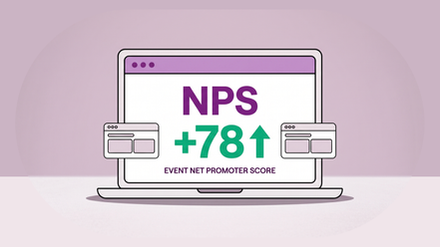
The outcome, over multiple years of applying this approach, has been an NPS improvement from 15 to 62 for the World Congress. Delegates reported feeling that the content and the event had been nurtured specifically for them, which is a different kind of engagement from simply feeling adequately informed.
The connection between event personalization and retention
The link between a personalized event experience and renewal is not direct in the sense of a single cause and a single effect. It operates through a chain of smaller things: the member who registered because the invitation spoke specifically to their situation; the session they attended because it was recommended based on their role; the follow-up they received that referenced what they’d actually done at the event rather than what they might have done. Each of these is a small signal that the organization knows who this member is. Accumulated over time, those signals form the emotional connection that makes renewal feel obvious rather than optional.
The Institute of Internal Communication identified this dynamic explicitly when reflecting on what its previous platform couldn’t deliver. Jennifer Sproul, Chief Executive of IoIC, described the challenge: “Members didn’t feel that IoIC benefits were essential to their daily mission of helping their colleagues and organisations thrive – an emotional disconnect that was a major challenge for us in retaining members, expanding services, and continuing growth.” Resolving that disconnect, in part through more relevant and personalized member communications, contributed to a 52% increase in membership applications and 25% overall membership growth after moving to ReadyMembership.
Members didn’t feel that IoIC benefits were essential to their daily mission of helping their colleagues and organisations thrive.
Megan Flower, Membership and Partnership Manager at Caravan Industry Victoria, articulated the same underlying logic from a prospect’s perspective when explaining why personalization capability was central to their platform decision: “The personalisation is a really big selling feature for us. The fact that we can profile members more deeply and tailor messages to them based on their engagement is pure gold as far as I’m concerned.”
The fact that we can profile members more deeply and tailor messages to them based on their engagement is pure gold as far as I’m concerned.
Starting where the data is
The practical challenge for most associations is that meaningful event personalization requires good member data, and good member data requires both a platform capable of capturing it and a discipline about what to ask and when.
Rennie Schafer’s observation on this is worth taking seriously: “Do you want more members? Or are you trying to increase event attendance? There’s no point sending a 20-point questionnaire that overwhelms new members and makes it more difficult to join. Are you going to use that data, do you need it?” FEDESSA built its personalization capability gradually, starting with a small number of data points and using behavioral signals (email opens, event attendance patterns, website engagement) to fill in the picture over time rather than front-loading data collection in a way that created friction.
Are you going to use that data, do you need it?
That restraint is itself a form of personalization strategy. Members experience it as an organization that knows them without having interrogated them. Over time, the data becomes richer, the personalization becomes more precise, and the events become more valuable to attend, because the organization has been listening rather than just broadcasting.
What the platform needs to make this possible
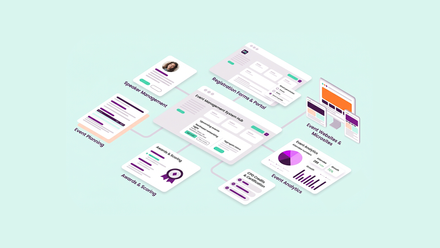
Personalizing events at this level is not primarily a content challenge. It’s a data architecture challenge. The rules engine that assembles a personalized event email needs to be able to query membership grade, role, attendance history, organization type, and engagement data simultaneously. If event management and membership records sit in different systems, that query requires integration that is expensive to build and prone to failure at the edges. If they’re part of the same platform, it’s simply how the system works.
ReadyMembership’s rules engine operates across the full member record (organization data, individual profile, event history, email engagement, and membership status), enabling personalization that reflects the whole relationship rather than a single dimension of it. For associations looking to use their events program as a retention driver rather than just a program cost, that integration is the foundation on which everything else is built.