The delegate journey starts at registration, not on the day
Most associations treat the gap between registration confirmation and the event itself as a logistics window. Send the reminder. Include the venue details. Confirm the schedule. Then hope that delegates show up on the day prepared, engaged, and knowing what to expect.
The associations that consistently report the highest delegate satisfaction scores take a different view. They treat that window as a relationship window — one of the most important stretches of the member experience, and one that most platforms aren't designed to support well.
Why the pre-event period matters more than most teams think
By the time a delegate registers for an event, they've already made a commitment. What happens between that moment and the event itself determines whether they arrive prepared, engaged, and feeling like the organisation has taken their attendance seriously — or whether they arrive uncertain about the format, missing information they needed, and having heard nothing except a generic reminder.
For complex events — multi-session conferences, deep-dive workshops, annual congresses with parallel programme streams — the gap between those two experiences is enormous. Delegates who understand what's being asked of them, who have contributed to the programme, and who have been communicated with in a way that reflects what they've booked arrive as a fundamentally different audience from those who received a uniform confirmation and a calendar invite.
Damian Hutt, Executive Director of the Association of Association Executives, describes the challenge clearly: the most valuable thing AAE's platform does for the World Congress isn't on the day itself. It's in the weeks beforehand, guiding delegates through a complex preparation process in a way that's specific to each person's bookings and profile.
Communicating a very complex event — what people need to do — that's the biggest thing for us.
Intelligent task management over generic reminders
The most common pre-event communication failure is the generic chase. A delegate hasn't completed their profile, selected their sessions, or submitted a required input, so they receive an email telling them their registration is incomplete. That message tells them what they haven't done. It doesn't tell them why it matters, what specifically is missing, or how long it will take to complete. It treats every delegate the same, regardless of what they've actually booked or what information is relevant to them.
The alternative — targeted reminders that reference specific outstanding items based on each delegate's registration — requires the event platform to know what each person has and hasn't done in relation to their own booking. That's only possible if the event management system has the granularity to track individual task completion and the ability to use that data to vary outbound communications.
AAE uses a visual task display that shows each delegate their personal progress: checkmarks for items completed, warning indicators for anything overdue, and upcoming deadlines highlighted. The reminder emails that fire are specific — not "you haven't finished your registration" but "you haven't yet submitted input for the workshop you've booked." Delegates receive a message that confirms the organisation is paying attention to them specifically, rather than sending a catch-all. Completion rates improve, and delegates arrive better prepared.
Heritage Open Days, which uses ReadyMembership to manage a national community of volunteer event organisers, found that access to engagement data across the annual cycle changed how they could communicate: "ReadyMembership has allowed us to understand who is engaging with the festival throughout our annual cycle. These new insights have enabled us to streamline our organiser resources and further tailor our communications to our community." Understanding where in the journey different people are — and communicating accordingly — is a different capability from sending the same sequence to everyone.
Session input as a tool for programme quality
For conferences with workshop, deep-dive, or roundtable formats, the delegate journey includes something most ticketing platforms can't support: gathering substantive input from attendees before the event, and routing that input to the people who need it.
At AAE's World Congress, delegates booked into deep-dive sessions complete input forms specific to the session they've selected. The platform dynamically generates the relevant forms based on each delegate's booking, rather than presenting a single form covering all possibilities. The responses route automatically to the relevant session leaders, who use them to adapt the programme in the days before the event. By the time the session begins, the leader knows who is attending, at what level, from what kind of organisation, and with what specific context or challenge they've brought with them. The session is better for it — and delegates who contributed to it are more invested in what happens.
That level of programme responsiveness isn't possible when session input is collected via a separate survey tool and manually consolidated. It requires the forms, the booking data, and the communications to be part of the same system.
The cumulative effect on satisfaction
The EAIE, the European Association for International Education, found that a well-managed delegate journey contributed directly to its strongest ever conference attendance — over 7,000 delegates at its 2024 Annual Conference — and to winning a Best Digital Transformation award. Jackie van Doorn, Project Manager at EAIE, described what a unified platform made possible:
One of the driving forces behind our transition to ReadyMembership was our need for one unified platform capable of managing membership, event registrations and more without the need for custom integrations.
That integration is what allows the pre-event experience to be consistent and personalised rather than disjointed.
Rennie Schafer, former CEO of FEDESSA, identified the principle that underlies all of this:
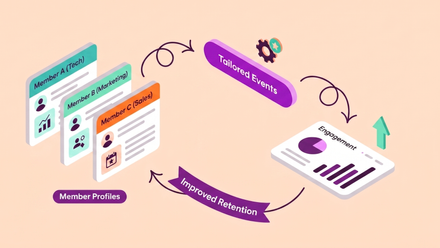
Personalisation touches every point — from member journeys, to retention to events. If you get it right it gives you the ability to give members what they want, when they want it. Asking the right questions and collecting the right data at the right time is allowing us to do just that.
The right questions, at the right time, to the right person — that's what the pre-event window enables, when the platform supports it.
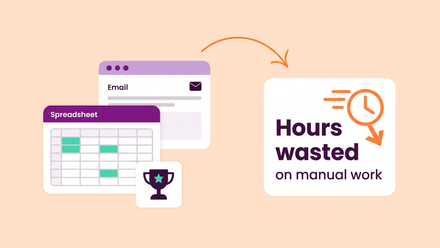
For associations currently managing their pre-event communications manually, or relying on generic reminder sequences, the question worth asking is what it would mean for delegate satisfaction if every person arrived knowing exactly what to expect, having contributed to the programme, and having been communicated with as an individual rather than as a registrant. The technology to make that happen is the same technology that manages the rest of the membership relationship. The two belong together.