How to run your association's awards program without the admin chaos
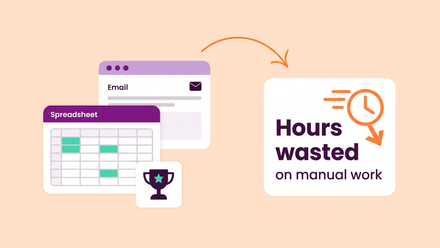
From a member's perspective, your awards program is a highlight of the year. They spend time crafting their entry, they tell colleagues they've been shortlisted, they turn up on the night hoping to hear their name called. What they experience is recognition, prestige, a sense that the association sees and values what they do. What they don't see is the six weeks of spreadsheet management, unanswered judge emails, and manual score reconciliation that made it happen.
That gap — between the experience an awards program is meant to create and the one the coordinator is living behind the scenes — is rarely a reflection of how much effort the team is putting in. It's almost always a configuration problem. The admin burden that accumulates across a typical awards cycle doesn't come from the program being too ambitious; it comes from processes that were never properly structured in the first place, and systems that weren't built to hold the complexity involved.
Most of the friction in association awards management is created before entries even open. Which means most of it is also preventable.
Why awards admin gets complicated so quickly
The volume of moving parts in an awards program is easy to underestimate until you're in the middle of one. You're coordinating entries from members across different categories, tracking which submissions are complete and which are missing information, communicating deadlines to entrants who inevitably need reminding, assigning entries to the right judges, managing conflict of interest declarations, collecting and comparing scores across multiple criteria, and then pulling all of that together into a coherent outcome that can be communicated credibly to members and wider stakeholders.
Each of those steps is manageable in isolation. The problem is that they all happen simultaneously and in sequence, often across a compressed timeline, and when the underlying infrastructure is a collection of separate tools — a form builder, an email platform, a shared spreadsheet, a judging template — the coordination overhead compounds at every stage.
Judging is typically where the admin burden peaks. Assigning judges manually, sending individual briefing emails, chasing outstanding scores, and reconciling results from multiple sources is time-consuming in proportion to the number of entries and judges involved. Add conflict of interest management to that mix — which requires tracking who knows who and ensuring impartiality across categories — and a process that should be straightforward becomes genuinely unwieldy.
There's also the member experience to consider. Entrants who can't easily check the status of their submission, who have to re-enter information they've already provided to your organisation, or who receive inconsistent communications at different stages of the process will form an impression of your program from those touchpoints, not just from the outcome.
Getting the structure right before entries open
The administrative burden of running awards is largely determined by decisions made before the program opens, not during it. Organisations that find the process most painful are usually the ones who have tried to retrofit structure onto a program that was never properly configured at the outset.
A well-configured awards program starts with a clear architecture: how many categories you're running, what the eligibility criteria are for each, what questions entrants need to answer, how judging will be weighted, and whether you're running regional rounds that feed into a national or overall final. Getting those parameters defined upfront — and having a system that can hold that structure rather than requiring you to manage it manually — changes what the subsequent stages feel like.
Eligibility is worth particular attention. If your program is open to members only, or to specific membership grades, or to members who have attended a particular event, managing that manually at the point of entry creates friction for entrants and administrative work for your team. A system that can apply eligibility rules automatically, based on existing membership data, removes that problem entirely.
What good judging management actually looks like
Most of the administrative complexity in an awards program sits in the judging stage, and most of it is avoidable. A structured approach to judging management rests on a few basic principles: judges need a clear, consistent view of what they've been asked to score; scoring criteria need to be applied consistently across all entries and all judges; and the process needs to accommodate conflict of interest declarations without requiring the administrator to track them manually.
When judges are drawn from your membership or wider professional community, as is common in association awards, the risk of undeclared connections between judges and entrants is real. A well-run program handles this transparently — giving judges the means to declare conflicts, configuring the scope of those conflicts (at a category level, for example), and ensuring that affected entries are appropriately reassigned. Doing this in a system, rather than through email correspondence, creates a clear audit trail and reduces the risk of disputes after results are announced.
The judge experience matters too. Judges who receive a clear brief, have easy access to their assigned entries, can see exactly what's outstanding, and can submit scores through a structured interface are more likely to return their assessments on time and to a consistent standard. An unwieldy or confusing judging process tends to produce late responses and chasing, which falls back on the awards coordinator.
Giving entrants a better experience
Entrant experience is often the last thing that gets attention in awards administration, which is the wrong order of priorities. The experience of submitting an entry is the first direct interaction many members will have with the program, and it sets the tone for how they perceive it.
Self-service entry — where members log in, see their pre-populated details, answer the relevant questions for their category, and save their progress as they go — removes a significant amount of friction. The ability to return to a draft entry before the deadline, rather than having to complete it in a single sitting, also tends to increase completion rates. And allowing entrants to make amendments up until the entry deadline, rather than creating a manual amendment request process, reduces the volume of inbound queries the awards team has to handle.
Custom questions per category are worth building in from the start too, rather than using a generic form that forces entrants to navigate questions that aren't relevant to them. This is a small thing in terms of system configuration but a meaningful one in terms of the entrant experience.
Pulling results together without the manual reconciliation
Once judging closes, the process of assigning prizes can be either straightforward or laborious depending on how the scoring data is held. If scores have been collected through a structured system with weighted criteria, the administrator should be able to view overall rankings, drill down into individual judge scores where needed, and allocate prizes based on a clear and defensible picture of the results. If scores have been collected through email or spreadsheet, that picture has to be assembled manually before any prize allocation can happen.
For programs with regional rounds that progress to a national or overall final, the configuration of which prize levels qualify to progress is something best defined at the setup stage rather than worked out at the results stage. Having that logic built into the program structure means regional outcomes feed automatically into the next round, rather than requiring manual transfer.
The ability to export results data is also worth thinking about early. Board reports, sponsor communications, and press releases all require results in a usable format, and extracting that from a well-structured system is straightforward in a way that extracting it from a spreadsheet is not.
How this works in a platform built for membership organisations
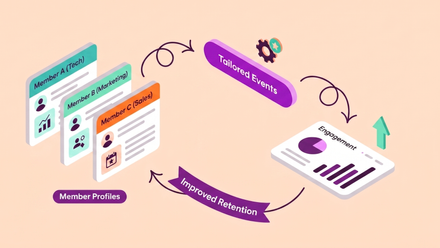
The challenges described above are exactly what ReadyMembership's awards management module is designed to address. Rather than operating as a standalone tool, it works within the same platform your team already uses for membership, events, and communications — which means eligibility rules can draw on live membership data, judge assignments can be made from your CRM, and entrant communications can be managed through the same email tools you use for the rest of your member engagement.
The module supports multi-category programs, regional rounds with national finals, weighted judging criteria, conflict of interest management, and role-based admin access — so the awards coordinator can manage day-to-day operations without needing access to your broader platform configuration. Entrants submit through the same member portal they use for everything else, with their details pre-populated and the ability to save and return to entries before the deadline.
For organisations running more than one awards program, or scaling a program that has grown beyond what a spreadsheet-based approach can handle, having all of this within a single integrated system rather than assembled from separate tools makes a meaningful difference to the workload and the consistency of the experience you're able to deliver.