The 2026 DX report has an AI problem hiding in plain sight
The MemberWise Digital Excellence Report is one of the most useful pieces of research the membership sector produces. Nearly 500 professionals contributed to this year's edition, and the data is statistically significant — which means it is worth taking seriously. But research only creates value if it prompts action, and the 2026 findings are telling a more urgent story than the headline numbers suggest. So here is my read on what the report is really saying — and four things I think every membership organisation should do as a result.
Read together, the 2026 data describes a membership sector navigating a moment of genuine discontinuity. And the central force driving that discontinuity is AI. Not AI as a feature on a to-do list. AI as a shift in how people find information, consume content, and decide where to spend their attention. That shift is already changing what engagement means, how integration challenges play out, and what it actually takes to understand your members.
The integration problem has moved, not gone away
The headline that AMS/website integration has dropped from the sector's number one challenge to sixth place is genuinely good news. A significant number of organisations have done the work and the benefit is clear.
But look a little further and a more complicated picture emerges. LMS integration sits at just 19%. Community platform integration remains low. Member portal connectivity is lagging. The organisations that solved the AMS/website problem are now running into the next layer of the same challenge, and it is harder to fix because the systems involved are more varied and the data flows more complex.
The report also shows that 59% of organisations found ease of integration fell short of expectations. That figure matters. It tells you that for a large part of the sector, integration is still more painful and more expensive than anticipated. When you bolt systems together rather than build from a common foundation, the joins are always the weakest points.
There is also a trend worth watching. A growing number of mid-sized membership bodies are migrating to large enterprise CRM platforms. These are capable tools, built for scale, and in the right context they make sense. But they come with implementation complexity and membership-specific configuration requirements that the procurement process rarely surfaces. The total cost of ownership is rarely what it appears at the outset.
All of this matters more now than it did two years ago. Because if your systems are siloed, your AI will be too. An AI tool can only answer questions about the data it can see. The integration gaps you have not closed yet are, in a very direct sense, the reason your AI strategy will not work when you try to build one.
Measuring engagement is the right priority. Most organisations are solving it the wrong way.
This year's report identifies inability to measure member engagement as the sector's single biggest challenge, overtaking AMS/website integration which has held that position for years. In some ways that is a positive sign. Organisations are asking better questions.
But ask people working in membership teams why it feels so hard, and you tend to hear a more honest answer. It is not that the data does not exist. It is that there is too much of it, spread across too many systems, with no clear way to connect it with the resource available. Most small and medium-sized membership bodies are running lean digital teams managing an AMS, a CMS, an email platform, an events tool, and perhaps an online community. Each generates data. Very few of those systems talk to each other meaningfully. So teams fall back on what is manageable.
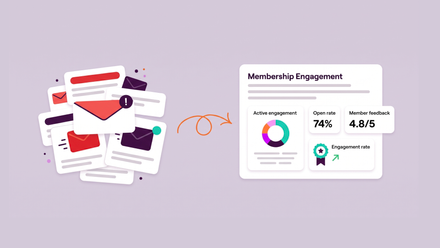
The report shows that online surveys are the primary method organisations use to measure engagement, with email open rates coming second. These are better than nothing. But they are snapshots, not signals. They tell you what a member thought at a particular moment, not whether they are drifting toward lapse or quietly becoming your most engaged advocate.
There is a second dimension to this that the report does not name explicitly but which is very real. AI tools are changing how people search for and consume content. Members are increasingly getting answers without visiting your website, opening your email, or logging into your portal. Traditional engagement signals are becoming less reliable not just because organisations have not connected their data, but because the behaviours those signals were designed to track are changing.
Real engagement measurement comes from behavioural data. What are members clicking on? What are they downloading? Which events are they attending? Which community discussions are they contributing to? And critically, is that pattern changing over time?
Only 19% of organisations are using online behaviour as a personalisation source. Only 12% are using purchase behaviour. These numbers suggest that even where organisations have the data, they are not yet connecting it to action.
The organisations getting this right are the ones where the data lives in one place. FEDESSA saw retention jump from 85% to 94% after implementing personalisation based on connected member data. The British Dietetic Association reduced attrition from 11% to 4% and grew specialist group participation from 50% to 63%. The Institute of Internal Communication grew membership by 52%. None of these outcomes came from a new analytics tool bolted onto existing systems. They came from having a unified data foundation the team could actually act on.
The measurement problem and the integration problem are the same problem.
AI adoption is growing fast. Strategy is not keeping pace.
The report puts AI adoption in the membership sector at 26%, up from just 5% two years ago. The comparison to early social media adoption is apt, and not in an entirely comfortable way.
When social media arrived, organisations rushed to create accounts before they had any idea what they were trying to achieve. A decade later, many were still posting into the void and wondering why it was not translating to member value. The wasted time and budget was real.
AI is following the same pattern. The report shows that 60% of organisations are using ChatGPT and 41% are using Microsoft Copilot. Only 6% have integrated AI into their existing systems. And just 6% have a formal AI strategy.
Here is the problem that sits behind those numbers. When staff adopt general-purpose AI tools individually, without organisational oversight, you get what is commonly called shadow IT. People are uploading member data, policy documents, and internal guidance to third-party tools without necessarily understanding what happens to that content, who can access it, or how it is being used to train models. The reputational and compliance risk for membership bodies, many of whom hold sensitive member data and proprietary sector knowledge, is significant and largely unacknowledged.
A ChatGPT subscription used without governance is not an AI strategy. It is a risk.
The National Association of Local Councils, which has 9,500 users on its platform, recognised this early. As Lisa Stockdale, their Data and Systems Manager, explained: "Our members were already using AI tools, but without reliable source information. There is a real risk to our IP being uploaded to third-party AI tools, which we don't want to happen." ReadyIntelligence gave them a secure, controlled AI layer that works with their own data and knowledge base, protects what is theirs, and gives members fast, sourced, trusted answers. "It will be an additional benefit for members because they will be able to have quick access to information," Lisa noted. It is now a core part of their membership offering.
The organisations that will get genuine value from AI are the ones that treat it as an integrated capability with a clear purpose, connected data, and appropriate governance. That does not require enterprise budgets. But it does require a decision to start purposefully.
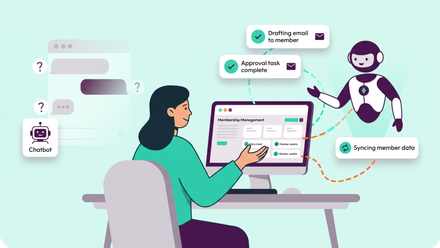
ReadyIntelligence is available as a standalone product designed to layer onto any existing technology stack, and it is also built natively into ReadyMembership. That is a deliberate choice. Not every organisation is ready to change platforms, but every organisation needs to start their AI journey properly — and the barrier should be as low as possible. If your systems are siloed, your AI will be too.
The community opportunity is still being underestimated
Online community adoption has grown for seven consecutive years and now stands at 47% of membership bodies. That is a positive trend. But it also means more than half the sector still has no dedicated online community, and of those that do, many are not using it as the strategic asset it could be.
The continued decline of free platforms like Facebook Groups and LinkedIn Groups is welcome. When your community lives on someone else's platform, you own none of the data, you control none of the experience, and you get none of the insight. That data is the point.
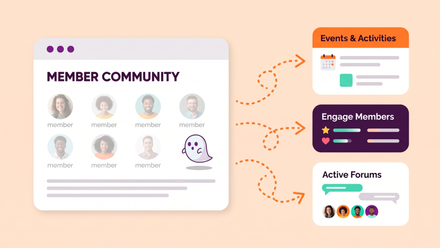
An online community properly integrated with your CRM is one of the richest behavioural data sources available to a membership body. Which topics are generating discussion? Which members are contributing? Where is the unmet need? If your community platform is not feeding that intelligence back into your membership operations, you are running a forum, not a strategic tool. And in an environment where traditional engagement signals are weakening, community behaviour may become one of the most reliable indicators of member health you have.
Pixl8 Groups is named in the report as one of the sector's leading paid community platforms. But the reason it works for our clients is not the community functionality in isolation — it is the integration. Member behaviour in the community feeds into the CRM. Engagement patterns inform personalisation. Content consumption shapes communications. The loop closes.
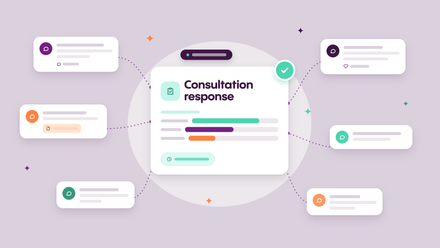
AMOSSHE, The Student Services Organisation, is a good example of what this looks like in practice. Within months of launching ReadyMembership, 81% of their 908 members had logged into the platform and 49% were actively engaged in discussion groups — not just renewing, but collaborating, sharing documents and contributing to sector-wide projects. Government consultation response times dropped from weeks to days because member expertise could be mobilised through the platform. That is community as infrastructure, not community as a benefit checkbox.
Four things to do after reading this report
If I were leading a membership body right now, here is where I would focus.
- Stop measuring engagement with surveys and start measuring it with behaviour. What are your members actually doing? Logging in, attending, downloading, contributing? Behavioural data is more honest than any survey response and it is available right now if your systems are connected.
- Audit your full integration picture with AI in mind. Where does member data go dark? Which systems are islands? The gaps you have not closed yet are not just an operational inconvenience — they are the ceiling on what your AI capability can ever achieve.
- Write your AI governance policy before you deploy any more tools. Shadow IT is already a risk in most organisations whether leadership knows it or not. Define what staff can and cannot use, with which data, and under what conditions. Then build your strategy from there.
- If you are still running on an in-house or bespoke system, act. In-house LMS solutions have dropped from 33% to 11% in four years. The same pattern is playing out across AMS and assessment platforms. Industry-standard solutions are winning because they are better supported and faster to evolve. The longer you stay on a bespoke system, the wider the gap gets.
The gap is widening
The 2026 report shows a sector moving in the right direction. More strategy, more integration, more automation, growing AI adoption. That is real progress and it should be recognised.
But the gap between the organisations getting this right and those still working through the fundamentals is growing. And the pace of change, driven largely by AI, means that gap is widening faster than it has in any previous cycle.
The ones getting it right are not necessarily the largest or the best resourced. They are the ones that decided, at some point, to treat their digital infrastructure as a strategic foundation rather than an operational overhead. That decision is always available to you.
This article is a response to the MemberWise Digital Excellence Report, published February 2026. To read the full report please download here.