6 reasons your awards program is harder to run than it should be
Running an awards program is one of the most visible things a membership association does — and for many teams, one of the most exhausting. Not because the program itself is flawed, but because the tools and processes holding it together were never built for the job.
If awards season generates dread rather than excitement in your team, one of these is probably why.

You're coordinating everything over email.
Submission confirmations, judge assignments, deadline reminders, result notifications — if any of these live in someone's inbox, you're one missed message away from a problem. Email is not a workflow tool, and it scales badly as your program grows.

Eligibility is a manual check.
Deciding who qualifies to enter — whether that's active members, specific membership grades, or event attendees — and then verifying it against a spreadsheet or CRM export is slow and error-prone. Eligibility should be enforced automatically at the point of submission, not checked after the fact.

Judges have nowhere purpose-built to work.
Sending PDFs and score sheets to volunteer judges and then chasing them for responses introduces friction that frustrates good judges and produces inconsistent results. A dedicated judging portal with clear scoring criteria and automated reminders changes the dynamic entirely.

Your entry form asks for information you already have.
If entrants are members, their basic details are already in your system. Asking them to re-enter contact information, organization name, and membership number is unnecessary admin — and it creates a poor first impression of the program before it's even begun.

There's no audit trail.
When a decision is questioned — and in competitive programs, they will be — you need to demonstrate how scores were allocated, who judged what, and how conflicts of interest were managed. Without a centralized record of the entire process, that becomes very difficult, very quickly.

You're rebuilding it from scratch every cycle.
A well-configured awards program should carry its structure, categories, and rules forward from one year to the next. If your team is starting from a blank spreadsheet every January, time and institutional knowledge are being lost unnecessarily.
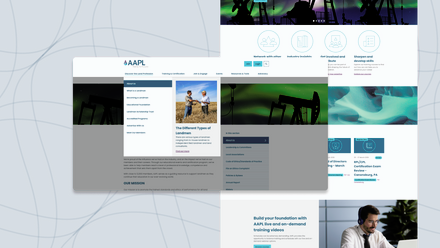
The pattern here is familiar to associations running complex programs on systems that were never designed for them. AAPL — the American Association of Professional Landmen — ran their certification program, scholarship awards, and member administration across six separate platforms for years, spending over $200,000 annually on a stack that, as their Director of Communications Andrea Spencer puts it, “was horrible. We were literally hemorrhaging money to make it work, and it still didn't work.” After consolidating onto ReadyMembership, their scholarship awards process — previously paper-based and manually administered — is now handled through automated digital workflows, and AAPL has capacity to focus on what the program is actually for.
Good awards program management software removes the operational burden from your team, enforces eligibility automatically, gives judges a professional experience, and keeps a complete record of every decision. The program itself does the celebrating — the platform should just stay out of the way.