Duplicate members, missing data: how to tackle the association data quality crisis
Why data quality matters more than ever
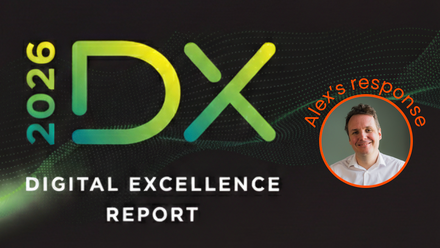
Poor data is not just an operational inconvenience. It is a strategic liability. If you cannot trust your member records, you cannot personalize communications, segment your audience accurately, measure engagement properly, or make confident decisions about your membership offer. And as the MemberWise Digital Excellence Report 2026 makes clear, measuring member engagement has become the sector's number one challenge, overtaking even system integration concerns that have dominated previous years. You cannot measure what you cannot trust.
There is also an AI dimension that organizations are starting to reckon with. As more membership bodies explore how AI can support member services, automate communications, and surface behavioral insights, the foundational requirement is always the same: clean, integrated, accurate data. There is a phrase that has been used in computer science since the 1950s — garbage in, garbage out — and it applies as much to modern AI tools as it does to mail merge. If your underlying data is poor, no amount of technology will compensate for it.
The MemberWise 2026 report shows that only 20% of membership organizations currently have a formal data strategy in place, rising to 37% in large bodies but still just 20% in small ones. That is a significant gap given how central data has become to everything else associations are trying to achieve.
The most common data quality problems — and what causes them
Duplicate member records are usually the most visible symptom. They accumulate quietly over time: someone joins online under a slightly different name to the one already in the system, a contact is re-entered manually after a lapse, an import from a spreadsheet creates a second record without anyone noticing. Each duplicate on its own is a minor inconvenience, but collectively they distort your membership numbers, skew your reporting, and mean the same person receives duplicate communications — never a good look.
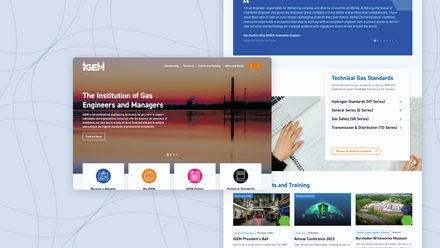
Missing data is the quieter problem. Half-completed profiles, contacts without email consent status set, corporate members where no primary contact is designated, addresses that were never properly structured. This kind of incomplete data is easy to overlook because it does not announce itself the way a duplicate does, but it shapes every decision you make. When IGEM replaced its outdated systems with ReadyMembership, one of the core drivers was exactly this: unreliable data and an inability to report with confidence. Within a relatively short period, membership applications increased by 180% — not because the data fix directly caused the growth, but because clean, structured data enabled them to operate and communicate with a level of professionalism their previous system simply could not support.
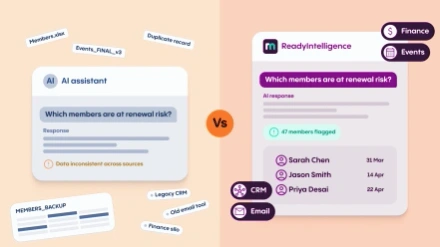
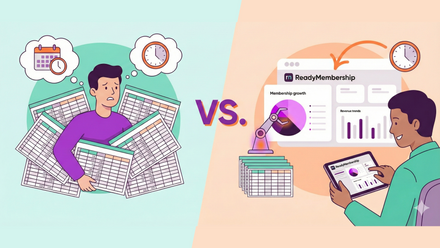
Fragmented data compounds both problems. When member information lives across multiple disconnected systems — a contact in your CRM, event bookings on a separate platform, email preferences in a third tool, finance records somewhere else entirely — you have no single view of the member, and no reliable way to maintain quality across all of them. The MemberWise 2023/24 Digital Excellence Report found that 63% of organizations had only partially integrated systems, with a further 25% having no integration at all. Progress has been made since, but for many associations the fragmentation problem persists and makes data quality genuinely hard to maintain even when teams are trying.
The American Association of Professional Landmen (AAPL) knew this problem well. Running six separate systems simultaneously, their data synced overnight rather than in real time, meaning staff spent afternoons entering information they could not verify until the following morning. Pulling a basic membership segment was effectively impossible. “We always had to do it manually and add it to our reports. We never could pull a number out about a segment of our membership. Never, ever, ever,” recalls Andrea Spencer, AAPL's Director of Communications. Moving to a single integrated platform replaced that fragmented stack entirely, giving staff live dashboard access to the numbers they need without specialist intervention or a custom report request.
We always had to do it manually and add it to our reports. We never could pull a number out about a segment of our membership. Never, ever, ever.
Five practical steps to improve your member data
1. Start with a data audit, not a data migration
Before you clean anything, you need to understand what you have. Which fields are consistently populated? Where are the gaps? How many potential duplicates exist? A structured audit — even a relatively simple one — gives you a baseline and helps you prioritize where to focus first, so you are not attempting to fix everything at once.
2. Establish a deduplication process
Whether you approach this manually or through system-assisted matching, you need a clear, repeatable process for identifying and merging duplicate records in a way that preserves the right historical data. The key is to do it methodically rather than sporadically, and to keep a record of what was merged and why in case you need to refer back later.
3. Fix your address and email data structures
Unstructured address data and unvalidated email addresses cause persistent downstream problems, from failed postal communications to suppressed sends. Standardizing how addresses are captured and stored, and actively managing your email suppression list, removes a significant layer of ongoing friction that tends to compound over time if left unaddressed.
4. Make data quality a process, not a project
One-off data clean-ups have limited value if the conditions that created the problem in the first place remain unchanged. The more sustainable approach is to build data quality into your day-to-day workflows: required fields at the point of entry, regular automated alerts for missing or inconsistent data, and member-facing profile completion prompts that keep records current over time rather than deteriorating between periodic interventions.
5. Work toward a single view of the member
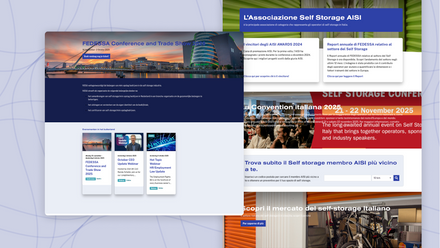
This is the goal that makes everything else worthwhile. When your CRM, website, events, email, and finance data all connect to a single member record, you stop managing data silos and start managing member relationships. FEDESSA, which represents over 2,500 self-storage facilities across Europe through 16 national associations, made consolidating data into a single view the foundation of a wider transformation — and went on to increase member retention to 94%, reduce admin by 12 hours a week, and achieve a 320% increase in email click-throughs.
The connection to everything else you are trying to do
Clean data is not the end goal — it is what makes the end goal possible. Whether you are trying to personalize the member journey, improve renewal rates, adopt AI tools, or simply report to your board with confidence, the quality of your underlying data determines how far you can go.
The good news is that you do not need to solve everything at once. Starting with a clear picture of what you have, and taking systematic steps to improve it, produces compounding returns over time. The organizations that invest in data quality now are the ones that will find it significantly easier to take advantage of what comes next.
ReadyMembership helps associations build and maintain a single view of their members — with built-in duplicate detection, address normalization, email validation, and data quality dashboards designed for membership teams. Find out more about how ReadyMembership supports data-driven membership management.