What good data security looks like in a membership platform
When membership organizations ask about platform security, the questions usually land with the technical team. How is the data stored? What happens if something goes wrong? Who has access, and how do you know? They are exactly the right questions to ask, and the answers (or the inability to give clear ones) tell you a great deal about a vendor before you have committed to anything.
Security is one of those areas where the gap between what vendors claim and what they can actually demonstrate tends to be widest. Certifications get cited in sales conversations without much explanation of what they require. “Cloud-hosted” gets used as a reassurance without any detail about which cloud, on what terms, with what redundancy. The goal of this piece is to set out what genuine platform security looks like in practice, so that operations and IT leads have a clearer frame for evaluating what they are being told.
Accreditations are a process, not a badge
The two most relevant security accreditations for a membership platform vendor are ISO 27001:2022 and SOC 2 Type 2. Both are widely cited; neither is trivial to hold. The distinction that matters most for buyers is that these are not one-time certifications. Earning them for the first time involves significant internal work (documenting processes, demonstrating controls, submitting to external audit), and maintaining them requires ongoing compliance throughout the year, not just at renewal time.
At Pixl8, this means working toward defined milestones continuously. Controls are monitored, in some cases on a near-real-time basis via our Vanta security page, which shows compliance status at any given point. When something slips below the required level, it triggers an action immediately, not at the next audit. A recent example: an account that had MFA disabled came to my attention the same day. That account’s user was contacted, MFA was reinstated, and had it not been, access would have been locked. That is what active compliance looks like in practice, as opposed to a certificate on a wall that gets renewed once a year.
SOC 2 Type 2 specifically assesses not just whether controls exist but whether they operate effectively over a sustained period, typically six to twelve months. That time dimension matters. A vendor who has recently achieved SOC 2 Type 2 for the first time has demonstrated something meaningful. A vendor citing a Type 1 assessment, which only covers a point in time, is a different proposition.
When evaluating vendors, ask when each accreditation was last renewed, who conducts the external audit, and whether you can see evidence of in-period monitoring rather than just the certificate itself.
Where the data lives, and how it is protected
One of the most important questions to ask any vendor is not just where their data is hosted, but what their relationship is with that hosting provider. “We use AWS” and “we use AWS and have a direct support relationship with Amazon” are materially different answers.
The right answer is applications deployed across multiple availability zones, so that if one physical data center experiences a failure, the platform continues to run from another location without disruption. Backups should be held across more than one cloud provider, not as a technical nicety, but because single-cloud backup strategies create a single point of failure. If the primary cloud provider has an outage, you need to be able to spin up operations elsewhere, and that requires having genuinely independent copies of your data.
Encryption is the other area where vendor claims deserve scrutiny. Data being “encrypted” can mean several different things, and the distinction matters. What you want to verify is that data is encrypted at rest (sitting in the database) and in transit between every layer of the application, not just at the public-facing edge. Some platforms encrypt traffic from the browser to the server but leave internal communication between application components unencrypted. What good looks like is end-to-end encryption from the edge through to the application layer, ideally using a managed key service such as AWS KMS. Beyond that, look for evidence of regular third-party penetration testing, static analysis tooling, and container scanning, not just a one-time assessment.
A vendor who cannot tell you which layers of their infrastructure are encrypted, or who defaults to “it’s all handled by our cloud provider,” has probably not thought this through carefully enough.
Compliance goes beyond a single regulation
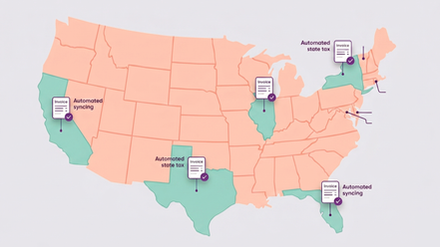
GDPR is the regulation most commonly raised in UK and European contexts, but for a platform with clients in multiple markets, the compliance picture is more complex. Australian organizations operate under the Privacy Act and Australian Privacy Principles, which impose specific requirements around how personal data is collected, stored, and disclosed. US-based associations need to consider CAN-SPAM requirements for email handling, and state-level privacy laws are becoming increasingly relevant for organizations with members across multiple states.
The practical implication for membership organizations is that choosing a platform with a serious compliance posture gives you coverage across multiple regulatory contexts, not just the one that feels most immediately relevant. NACA, a US-based association, noted when selecting their platform that data security standards in the UK tend to run ahead of federal and state requirements in the US, meaning that choosing a UK-built platform offered a degree of regulatory headroom they valued.
GDPR compliance also shapes how member data should flow through your systems more broadly. When data leaves the platform (whether through an admin export, an integration with a third-party tool, or simply being downloaded to a local spreadsheet) it moves outside the security controls of the platform. The discipline of keeping member data within a well-controlled, single-source system is itself a security practice, not just an operational preference.
Multi-factor authentication and access controls
MFA should be non-negotiable for any system holding personal member data, and it needs to be applied consistently rather than as an optional configuration. At Pixl8, MFA is required across all staff access to client systems, managed centrally so that access can be revoked in full and immediately when needed, for example when someone leaves the organization.
For member-facing platforms, MFA should be available for both administrative users and, where the sensitivity of the data warrants it, for members accessing the portal. The right level of access control depends on the nature of the data being held. An organization managing credentialing records, financial information, or health-related member data has different requirements from one running a standard membership directory, and a well-designed platform should be able to accommodate both.
When evaluating a vendor’s access control capabilities, the questions worth asking are: how is administrative access granted and revoked, can different staff have different permission levels, and is there an audit trail of who accessed or changed what? The audit trail question is often overlooked but matters considerably if you ever need to investigate an incident or demonstrate compliance to a regulator.
What to ask a vendor
Rather than accepting a security overview at face value, it is worth coming into vendor conversations with specific questions. The ones that tend to reveal most are:
- Which accreditations do you hold, when were they last renewed, and can you share the audit reports?
- Which cloud provider hosts the platform, and do you have a direct support relationship with them?
- How are backups stored, and are they held across multiple independent providers?
- Is data encrypted at rest and in transit at every layer, including internal application traffic?
- How is multi-factor authentication enforced for administrative access?
- What does your penetration testing program look like, and how are findings addressed?
- How do you handle data protection across multiple regulatory jurisdictions (UK GDPR, Australian Privacy Act, US state laws)?
A vendor with a robust security posture will answer these questions directly and with specifics. Vague reassurances or redirections to marketing materials are a signal worth taking seriously.
Security is not the most visible part of an AMS evaluation, and it rarely drives the final decision on its own. But it is the kind of thing that only becomes urgent after something goes wrong, and by then the contract is signed. Taking it seriously at the evaluation stage is significantly cheaper than taking it seriously afterward.