Your members don't know your portal exists
When AHOU, the Association of Home Office Underwriters, launched on ReadyMembership, Rheanna Smith had prepared a list of everything she thought she'd need: member communications, a training guide, a plan for fielding questions as people encountered the new system. What she found, when the platform went live, was that almost none of it was necessary.
“We're not going to need [it],” she told AHOU's board of directors. “It's not the old site — it's so much easier to navigate and use.” Members found their way around independently, with support queries well below what the team had anticipated.
It's not the old site — it's so much easier to navigate and use.
That experience points to something important about what a well-built platform should feel like. But it also surfaces a question that sits beneath the launch moment: getting members onto a portal for the first time is one thing. Getting them to come back regularly, to build a habit of using it, to discover the depth of what's available — that's a different and ongoing challenge, and one that requires deliberate effort that starts at launch and continues well beyond it.
The launch moment isn't the adoption moment
Most organisations treat portal promotion as a go-live activity. An announcement email goes out. Perhaps a short video or a set of FAQs. There might be a banner on the homepage for a few weeks. And then the launch fades into the background, and the portal is left to acquire its own audience.
What this misses is that awareness of a portal's existence and a habit of using it are two different things — and only the second one produces any of the outcomes membership teams are looking for: increased renewals, stronger engagement, reduced support queries, members who feel like the membership is worth what they're paying for it. Awareness fades. Habits have to be built, and building them requires a sustained and deliberate effort that starts at launch and continues well beyond it.
The organisations that see consistently strong portal adoption tend to approach it differently. They treat the first few weeks after a member joins as the critical window, and they use it not just to confirm the membership but to demonstrate the portal's value in a way that creates reasons to come back.
Why onboarding sequences change adoption outcomes
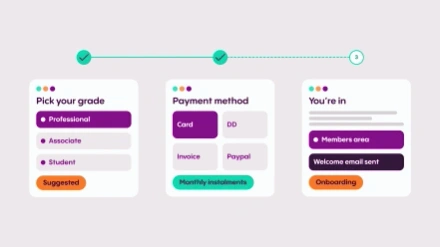
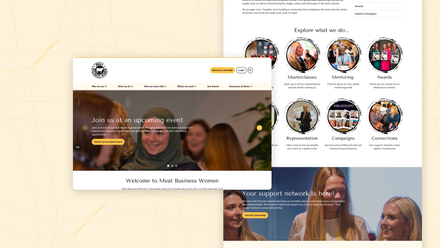
Meat Business Women understood this early. The onboarding process they built ensures that in the first three weeks after registering, new members receive a weekly email that highlights a different feature of their membership portal, with specific tips on making the most of it. Week one might introduce the member directory. Week two might walk through how to join a community group. Week three might highlight resources available to their membership grade.
This approach does several things at once. It creates multiple contact points in the period when a new member's engagement with the organisation is at its highest. It surfaces features that members might not discover through casual browsing, particularly the community and connection features that require some deliberate engagement before they become useful. And it builds a picture of the portal as a space with multiple reasons to return, rather than a destination for a single task.
The result is approximately 20% of the whole MBW membership logging in every month — a figure that reflects members who have formed a genuine habit of using the portal, not just members who log in when they need to renew.
The practical logic here is straightforward. A member who logs in for the first time to complete a specific task — updating their address, downloading a resource, registering for an event — may or may not come back. A member who, in their first month, has been shown the directory, joined a community group relevant to their specialism, and accessed content tailored to their interests has multiple reasons to return and has begun to form the associations that make the portal feel valuable rather than merely functional.
The content visibility problem
Beyond onboarding, one of the most consistent barriers to portal adoption is that members don't know what's behind the login. The public-facing website tells them what membership offers, in general terms. The portal shows them, specifically. But for many members the portal is an unknown quantity — a login page they haven't been given a strong enough reason to go through.
This is particularly relevant for organisations with significant content behind the member login: resources, research, CPD materials, community discussions. The value that sits behind that login is often genuinely substantial, and often genuinely invisible to the members who would benefit most from it.
One practical response is to use email communications not just to tell members about content but to link them to specific actions within the portal — a resource relevant to their specialism, an event discussion thread in a community they're part of, a new piece of CPD available for their membership grade. Each email that links to a logged-in destination reinforces the habit of accessing the portal and reminds members of what's there.
AMOSSHE, the professional association for senior student affairs managers in higher education, found that when the portal became genuinely useful — when the discussion groups were active, when the professional development content was accessible, when members could connect directly with peers rather than routing everything through the central team — adoption followed. “Members no longer have us as their point of contact,” said Julia Jean-Baptiste, Communications Manager at AMOSSHE. “They can directly take ownership of the sort of projects that they want to take on, and directly message the different members in our organisation.” That kind of self-directed engagement doesn't happen because members received a launch announcement. It happens because the portal delivered genuine value, repeatedly, and members formed a habit around that value.
Members no longer have us as their point of contact. They can directly take ownership of the sort of projects that they want to take on.
The re-engagement problem
Portal adoption isn't just a new-member challenge. Existing members who never formed a strong habit of using the portal during the years before a new platform launched represent a significant adoption gap — and reaching them requires a different approach from onboarding.
The most effective re-engagement sequences tend to be specific rather than general. A generic “have you tried our new portal?” email tends to perform poorly because it gives no compelling reason to click. An email that surfaces a specific piece of content relevant to the recipient, or reminds them that their community groups have been active recently, or invites them to complete a profile that will help them be found in the member directory, gives a concrete reason to log in. That first return visit is the hardest one. If the experience is good when they get there, the second visit is easier.
The data available in a well-configured CRM makes this targeting possible. Members who haven't logged in for 90 days can receive a different communication to those logging in monthly. Members who have never joined a community group can be invited specifically into ones relevant to their profile. Members who have only ever accessed the portal to renew can be shown what else is available to their membership grade. None of this requires complex campaign infrastructure; it requires segmentation, a clear view of what each segment hasn't done yet, and communications designed to address that specific gap.
Adoption as an ongoing operational responsibility
The underlying shift this requires is treating portal adoption not as a launch activity but as an ongoing operational responsibility — something that belongs in a regular marketing calendar alongside renewal campaigns and event promotions, with clear metrics and a clear owner.
The organisations that do this well tend to track portal login rates as a meaningful indicator of membership health, not just as a technical metric. A member who is logging in is a member who is finding value. A member who hasn't logged in for six months is at materially higher risk of not renewing, regardless of what they say in a satisfaction survey. The portal data, because it reflects actual behaviour rather than stated intent, often tells a more honest story about member engagement than any other metric available.
Building that understanding into how an organisation thinks about retention, and designing the portal communication strategy to respond to what the data shows, closes the gap between a portal that exists and a portal that members use.
ReadyMembership's email marketing and CRM tools are designed to work together with the member portal, giving you the data and the communication capabilities to build adoption deliberately — from onboarding sequences through to long-term re-engagement.