Why switching your AMS feels scary, and why staying put is scarier
If you've ever sat in a room and agreed that the current system isn't working, then watched another year pass without anything changing, you're in good company.
Switching association management systems is one of the most significant operational decisions a membership organization can make. It touches every team, every process and every member interaction. It requires time, budget, buy-in from people who are already stretched, and a tolerance for disruption during the transition. For all of those reasons, the decision to move is almost always delayed longer than it should be.
But there's a cost to staying, too. And for many associations, it's a cost they've been paying for years without fully accounting for it.
The comfort of the familiar
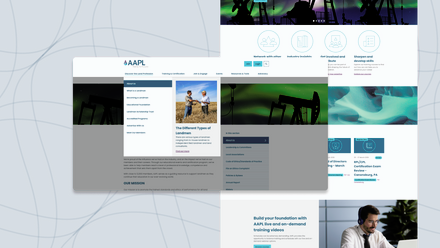
The American Association of Professional Landmen (AAPL) stayed with their AMS, Personify, for ten years. They knew its limitations well. They knew that every change request came with an eye-watering price tag — a simple question added to a renewal form was quoted at $30,000. They knew their certification programme, one of the most important things AAPL does for its members, was held together largely by spreadsheets and staff who knew exactly which gaps to watch. They knew their website, their LMS, their community platform, their email tool and their scholarship system were all separate, and that keeping them loosely connected required constant manual effort.
They stayed anyway. Not because anyone was happy with the situation, but because a known problem feels more manageable than an unknown solution.
"No one likes to go through this process," says Andrea Spencer, AAPL's Director of Communications. "It was just easier to add something else that we could make do with. Instead of just saying: we need to sit down and just chuck it."
That instinct is completely understandable. But it's worth examining honestly, because the logic of "easier to stay" tends to rest on assumptions that don't always hold up.
What makes switching feel harder than it is
The fear of disruption
The most common concern is that switching will cause a period of chaos — broken processes, confused members, overwhelmed staff. This is a legitimate risk, but it's one that can be managed with good planning, a realistic timeline and a partner who has done this before. The disruption of a well-managed implementation is finite. The disruption of a system that isn't meeting your needs is ongoing.
The sunk cost of familiarity
After years on a platform, your team has developed workarounds, shortcuts and a kind of institutional knowledge about how to get things done despite the system rather than because of it. That knowledge feels valuable, and in a sense it is. But it's also a form of accumulated debt — the more your team has adapted to a broken system, the harder it can be to imagine a different way of working.
The difficulty of getting everyone on board
AAPL's evaluation process involved five internal stakeholders, and they didn't all reach the same conclusion at the same time. Half the team was drawn to ReadyMembership's integrated, modern approach. The other half preferred something that looked more familiar. It took time, and some external support, to bring the group to a shared decision. That kind of internal friction is normal — but it shouldn't be mistaken for a sign that the move is wrong.
The size of the unknown
When you've been in the same system for a long time, you know exactly what you've got, even if it's not much. A new platform means new unknowns, and humans are generally loss-averse enough to find a bad known preferable to an uncertain unknown. This is particularly true for leaders who will be accountable if things go wrong.
What staying actually costs
The risks of switching are visible and specific. The costs of staying tend to be diffuse and gradual, which makes them easier to overlook — but no less real.
For AAPL, staying meant spending over $200,000 a year across six platforms that didn't properly connect. It meant a certification programme so cumbersome that many eligible members simply didn't bother to apply. It meant staff spending significant time on manual processes that should have been automated. It meant reporting to the board using numbers nobody was entirely confident in, because data synced overnight and the systems couldn't reliably tell you whether a member's certification and their membership were both current at the same time.
"It was becoming increasingly more difficult to do business," Andrea says. "We couldn't adapt anything without spending ridiculous amounts of money to make little tiny tweaks."
The longer an organization stays in a system that isn't working, the more those costs compound. Workarounds become embedded. Manual processes become the only way anyone knows how to do something. The gap between what the technology can do and what the organization needs it to do grows wider. And all the while, members are experiencing a platform that reflects the organization's constraints rather than its ambitions.
What good change management actually looks like
One of the things that makes switching feel less frightening is understanding that a well-run implementation isn't as chaotic as the imagination suggests, and that the organizations who have been through it rarely describe it the way they feared it would go.
AAPL's evaluation process was thorough — around 20 demos over the course of a year, a formal RFP, and a genuine effort to pressure-test ReadyMembership's ability to handle their most complex requirements, particularly around certification management. By the time the decision was made, the team had confidence in both the platform and the partner. The implementation involved real complexity: a large data migration, custom workflows for AAPL's certification and membership structures, and a go-live timed around the holiday period to minimise member impact. There were things learned in the first weeks post-launch, as there always are, but the Pixl8 team's responsiveness meant those things were worked through rather than compounded.
Implementation was great. The Pixl8 team are literally some of my favourite people. I feel like they know our system so well. They really understood what we were trying to do, what we were trying to fix.
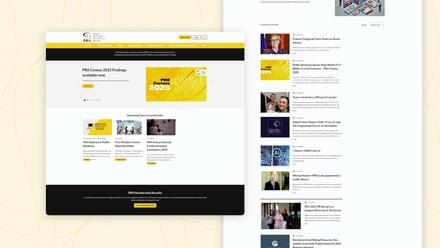
The experience at the Public Relations Institute of Ireland (PRII) tells a similar story. Dr Martina Byrne, PRII's CEO, describes their previous website — which had been in place for a decade before they finally moved — as being "held together with gaffer tape and prayer." The team of five had no dedicated digital or IT specialists, and the prospect of a full platform migration was understandably daunting. But a year after launch, PRII had achieved 92% member retention against a sector average of 88%, a 70% increase in website visits, and 86% of members rated the new platform positively in a member survey.
We don't use the word 'transformation' lightly. But that's what it was. It wasn't just a tech project — it redefined how we operate and how we're perceived.
What both organizations found, and what tends to be true more broadly, is that the disruption of a well-managed implementation is finite. The disruption of a system that isn't meeting your needs is ongoing. The change management challenge with staff is real — training people on a new system while simultaneously running the old one requires careful timing and good communication — but ease of use matters enormously here. At AAPL, initial reactions from staff were cautious. "Right away it was very deer in the headlights," Andrea recalls. "But now I keep getting comments about how much they love working in it."
The moment the calculation changes
For AAPL, it took a change in leadership to finally shift the internal calculus. A new perspective, combined with a five-year contract renewal looming, made the cost of inertia impossible to ignore any longer.
For other organizations, the trigger might be different — a vendor announcing end of life, a particularly painful renewal season, a board that has run out of patience with unreliable reporting, or simply a moment where someone does the maths and puts the real cost of the current situation in front of the right people.
Whatever the trigger, the pattern is usually the same. The fear of switching turns out to be smaller than the fear imagined. The disruption is manageable. The other side looks better than the situation that came before.
Don't hesitate. From a customer service aspect and just functionality, you cannot find a better system out there. Save yourself some time and give them a call.
That's not a sentiment that emerges from a smooth, painless transition. It's one that emerges from an organization that went through the process, came out the other side, and looked back at ten years of staying put with a clarity that wasn't available at the time.
The question most associations in this position are really asking isn't whether switching is scary. It's whether they can afford to keep paying the cost of not switching. For most, the honest answer is that they've already been paying it for longer than they realise.