What your membership tech stack is really costing you
Most membership organizations know their technology isn’t quite working. What they often don’t know is how much it’s actually costing them.
It’s easy to look at individual subscription fees and feel like you have a handle on your technology spend. But the true cost of a fragmented tech stack goes well beyond the invoices sitting in your accounts folder. It lives in the hours your staff spend re-entering the same data across multiple systems, the member experiences that fall short because nothing is joined up, and the strategic work that never gets done because the admin never stops.
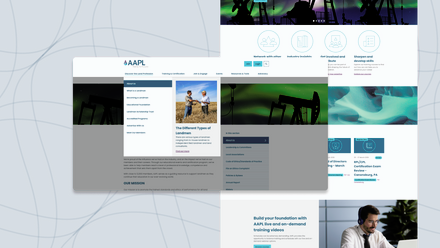
For the American Association of Professional Landmen (AAPL), a national association representing around 12,000 energy industry professionals across the US, the reckoning came when they finally added it all up. Across six separate platforms — an AMS, a learning management system, a community platform, an email provider, a scholarship management tool and a separately hosted website — they were spending over $200,000 a year. And as Andrea Spencer, AAPL’s Director of Operations, puts it: “It was horrible. We were literally hemorrhaging money to make it work, and it still didn’t work.”
How fragmented stacks grow
No association sets out to run six systems simultaneously. It happens gradually, one reasonable decision at a time.
The core AMS can’t handle a specific requirement, so a specialist tool fills the gap. That tool doesn’t quite connect with the website, so a workaround is built. Then another requirement emerges, another tool gets added, and before long the team is maintaining a patchwork of platforms that were never designed to talk to each other.
AAPL’s stack had grown this way over a decade. Their AMS, Personify ThreeSixty, had been chosen for good reasons, but it had been built on an accounts receivable foundation that made flexibility difficult and expensive. Every time AAPL needed to make a change, the cost was prohibitive. “We wanted an add-on for a question in the renewal process, and that was like a $30,000 add-on,” Andrea recalls. “For a question.” Rather than pay those costs repeatedly, the team looked to other vendors to fill the gaps — a pattern that is far more common than most associations would like to admit.
The costs you can see
The most obvious cost of a fragmented stack is the combined total of your subscription fees. For many associations, this number is higher than they realize, because technology costs accumulate gradually and are often spread across different budget lines — IT, marketing, events, membership — making it difficult to see the full picture at once.
AAPL’s $200,000 annual spend is a striking example, but it’s not unusual for mid-size associations to find themselves spending significantly more than expected when they map out all their active platforms, including hosting, maintenance contracts, integrations and any bespoke development needed to make systems talk to each other.
The exercise of mapping your actual tech spend — every platform, every integration, every maintenance contract — is a useful starting point. You may find the number is larger than you expected.
The costs you can’t easily see
The subscription fees are only part of the story. The harder-to-quantify costs are often larger.
Duplicate data entry
When your systems don’t share data automatically, someone has to move it manually. A course description updated in the LMS still needs to be corrected on the website and in the AMS. A membership status change in one system may not be reflected in another until overnight — or until someone remembers to update it. At AAPL, this was a daily reality. “If you made a change to something in the LMS, you’d have to change it in Personify ThreeSixty, then you’d have to change it on the website,” Andrea explains. “Or it wouldn’t get changed. It’d be changed here, but not here.”
Staff time on workarounds
When systems can’t do what the organization needs, staff find ways around them. Spreadsheets get created. Manual processes become embedded. People develop expertise in navigating a particular system’s quirks that can’t easily be transferred to anyone else. This hidden labor cost is real and ongoing, and it grows as the organization grows.
Delayed or unreliable data
At AAPL, data only synced overnight. That meant a report pulled at 3pm might not reflect changes made that morning. For a team trying to give their board accurate membership numbers or confirm event registrations in real time, that lag creates constant uncertainty. “We never could pull a number out about a segment of our membership,” Andrea says. “Never, ever, ever.”
Member experience friction
When your systems don’t connect, members feel it. Multiple logins, inconsistent information, clunky journeys between the website and the member portal — these are the symptoms of a fragmented back end showing up at the front end. They may not always prompt a formal complaint, but they quietly erode the sense that membership is worth the effort.
Strategic opportunity cost
Perhaps the hardest cost to quantify, but arguably the most significant. Every hour a staff member spends on manual data entry, chasing spreadsheets or navigating system workarounds is an hour not spent on member engagement, content, events or the other work that actually drives value. AAPL’s team knew there were members they weren’t following up with, students they were losing at key transition points, and projects that kept getting pushed back — not because of lack of intent, but because the day-to-day admin never stopped.
How to calculate your own total cost of ownership
If you want to understand the real cost of your current technology landscape, a total cost of ownership (TCO) calculation is a more honest framework than simply adding up your license fees.
Start by mapping every platform you’re currently paying for, including integrations, hosting, maintenance and any bespoke development. Then estimate the staff time spent on activities that exist only because of system limitations: manual data entry, building and distributing spreadsheet reports, reconciling data between platforms, and handling member queries that self-service should resolve. Apply a cost to that time, even a rough one, and the picture tends to shift significantly.
Finally, factor in what you’re not doing. If your team could reclaim ten hours a week from manual admin, what would they do with it? What’s the value of the member engagement work, the retention activity or the new initiatives that currently sit perpetually at the bottom of the to-do list?
This kind of calculation rarely produces a tidy number, but it usually makes the case for change far more clearly than a feature comparison between platforms ever could.
What a unified platform changes
When AAPL moved to ReadyMembership, consolidating six platforms into one, the immediate financial impact was significant. But Andrea is clear that the money, while welcome, wasn’t the most important part.
“More importantly, we were able to deliver better member services. Hopefully that’ll help us retain people, because they won’t be like, well, I don’t understand the system.” — Andrea Spencer, Director of Operations, AAPL
For AAPL’s staff, the shift from a fragmented stack to a single integrated platform has meant data that updates in real time, content changes that only need to be made once, and reports that anyone on the team can run themselves without needing specialist support. The certification program that once required months of manual processing is now managed digitally. The 600 student membership applications that were previously re-entered by hand each year are now handled through automated workflows.
The time saved hasn’t led to a smaller team. It has led to a team that can finally get to the work that matters.
Questions worth asking
If you’re trying to assess whether your current technology costs are working as hard as they should, these are the questions worth sitting with:
- How many separate platforms does your team log into in a typical week?
- How many times does the same piece of information need to be entered in more than one place?
- When your board asks for a membership number, how confident are you that the figure you give them is correct and current?
- What is your team not doing because the admin doesn’t stop?
The answers won’t always point immediately to a platform change. But they will tell you whether the cost of staying where you are is higher than you’ve been accounting for.
Interested in reading more about the AAPL story?