Why letting the public verify your members builds trust
A professional credential is a promise. It tells a client, an employer, or a member of the public that the person holding it has met a defined standard. But a promise only carries weight if it can be checked. A certificate framed on a wall, a set of letters after a name, a logo on a quote: all of these are easy to claim and, without a way to verify them, easy to fake. For associations that award credentials, the ability to let someone confirm a member's status quickly and reliably is not a nice-to-have. It is what turns membership into trust.
This matters most in sectors where the stakes of getting it wrong are high, and where there is no regulator standing behind the credential. The clearest example comes from the Institute of Translation and Interpreting, which operates in a UK profession with no statutory regulation and no protected title. Anyone can call themselves a translator. As ITI's chief executive, Sara Robertson, puts it: “the wild west out there.” In that environment, the value of ITI membership rests almost entirely on the organization's ability to vouch for its members, and to let anyone else check that vouching for themselves.
The problem with credentials you cannot check
Credentials that cannot be verified create a gap that bad actors are happy to fill. In translation, this shows up around certified translations, the documents that courts, government departments, and agencies require for things like marriage certificates, qualifications, and legal proceedings. In practice, anyone can label a translation as certified by simply asserting that it is accurate. Without a way to confirm the credential behind it, the certification means little, and the organizations relying on those documents carry the risk.
The same gap exists in any field where a credential influences a decision. If a client cannot easily confirm that a contractor, adviser, or practitioner holds a current qualification, they fall back on guesswork, reputation, or whatever the person tells them. That is bad for the public, who may be misled, and bad for the genuine professional, whose hard-won credential is diluted by anyone willing to claim it without earning it.
Verification turns a benefit into a public good
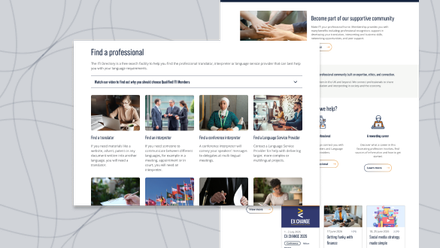
The associations that handle this well treat verification as a service to the outside world, not just an internal record. ITI does this through Member Check, a public lookup that lets anyone type in a name and instantly confirm whether that person is a qualified member, with no login or account required. It is deliberately simple, and it is used heavily, running to hundreds of checks a month, for documents including marriage and divorce certificates, qualifications, and material headed for the courts.
What makes this powerful is the clarity it creates. Because the public can verify members, the credential becomes more valuable to hold. Verification stops being an administrative function and becomes part of the value proposition. The member gets a credential that opens doors precisely because anyone can check it.
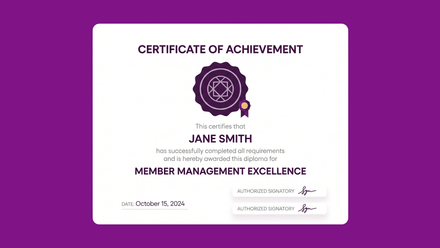
Credentialing bodies in other sectors see the same effect when verification is easy. The American Association of Professional Landmen rebuilt its certification program on a single platform, replacing six disconnected systems and saving more than $200,000 a year, while making its credentials far simpler to manage, issue, and confirm. When a credential is easy to administer and easy to verify, members value it more, and the organization spends less time on manual checks and corrections.
Verification only works if it is effortless
The reason public verification often fails is friction. If checking a credential requires creating an account, navigating a clunky portal, or emailing the association and waiting for a reply, almost no one will do it, and the credential loses its protective power. The verification has to be as easy as a search, available to someone who has never heard of the organization and never will again, completed in seconds.
That is a deliberate design choice. ITI's Member Check asks for nothing but a name and returns a clear answer. The person doing the checking, often a stranger to the organization, does not need to understand membership tiers or qualification routes. They simply need to know whether they can trust the professional in front of them. The simpler that answer is to get, the more the credential is worth.
The flip side is that effortless public verification depends on accurate, well-maintained data behind the scenes. A verification tool is only as good as the membership records feeding it. If a member's status is wrong, lapsed without being updated, or duplicated across systems, the tool will either give a false answer or quietly stop being trusted. Keeping that data clean and current, in one place rather than scattered across spreadsheets and separate systems, is the unglamorous work that makes verification possible.
What this means for your platform
Public credential verification sits at the intersection of membership management, credentialing, and trust, which is why it is so dependent on having the right infrastructure underneath it. The credential has to be issued and tracked, the member's status has to be accurate and current, and the verification has to be exposed to the public in a way that is instant and reliable.
ReadyMembership supports this by keeping membership status, credentials, and the public-facing directory in a single source of truth, so what the public sees when they verify a member is the same record the association manages internally. For ITI, that means a member of the public can confirm a translator's qualified status in seconds, drawing on the same data ITI uses to run its assessment and membership processes. There is no separate system to keep in sync and no gap for inaccuracy to creep into.
A credential is a statement about who someone is professionally. Verification is what makes that statement believable to the people who matter, the clients, employers, and public who rely on it. For any association whose members are judged on their credentials, making that verification effortless is one of the most direct ways to increase the value of membership and protect the standard the organization exists to uphold.